WORLD MOUNTAIN RUNNING ASSOCIATION

DENTIS AND NILSSON CLAIM FIRST EVER WORLD CUP WINS AT ROLLERCOASTER 21 IN POLAND

DENTIS AND NILSSON CLAIM FIRST EVER WORLD CUP WINS AT ROLLERCOASTER 21 IN POLAND

Two commanding performances bring Arianna Dentis (ITA) and Martin Nilsson (SWE) their long-awaited first victories in the WMRA Mountain Running World Cup.  
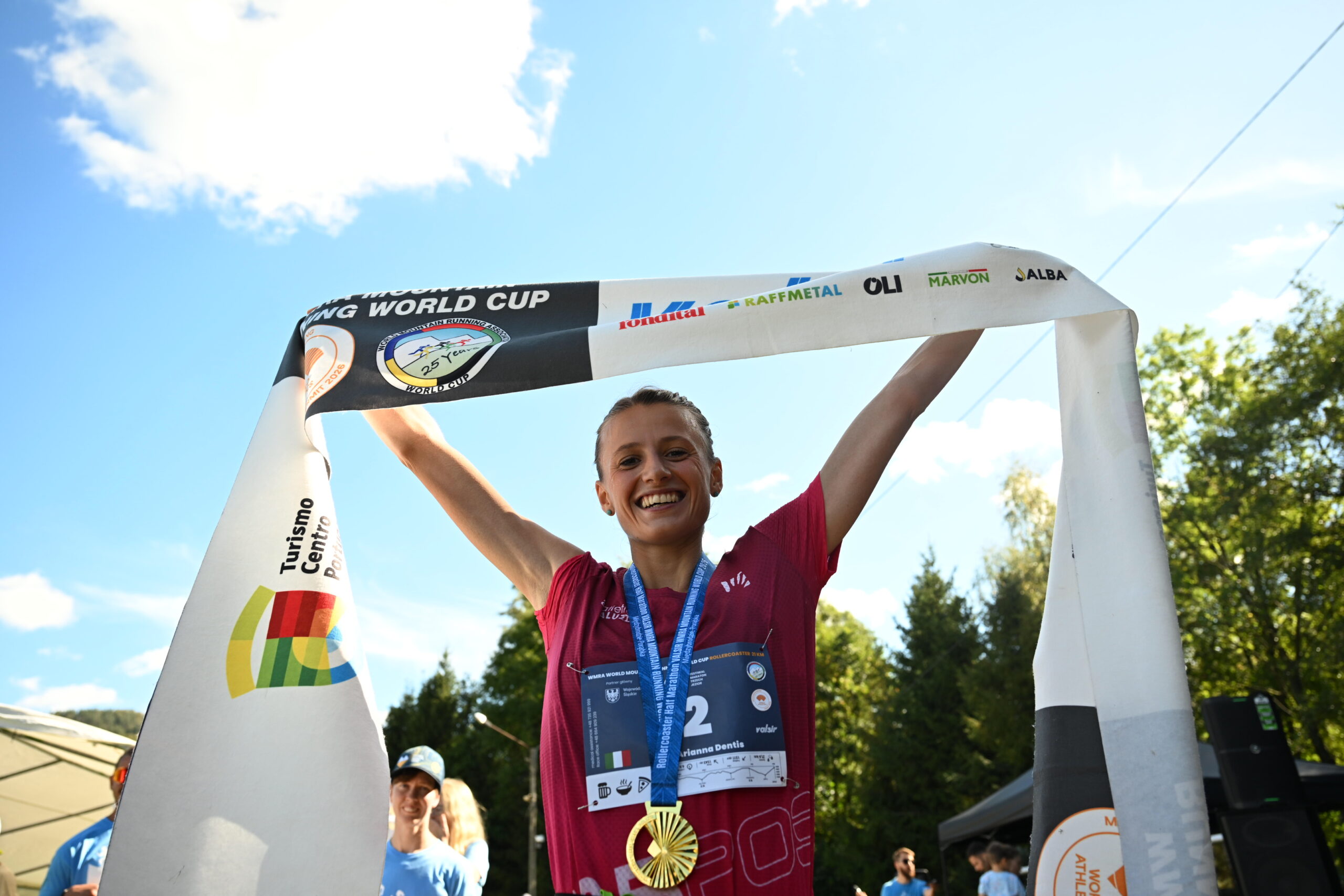
Arianna Dentis (ITA) and Martin Nilsson (SWE) claimed their first WMRA Mountain Running World Cup victories of their careers at Rollercoaster 21, closing the Long Distance season with two decisive performances in the Beskid Mały mountains.

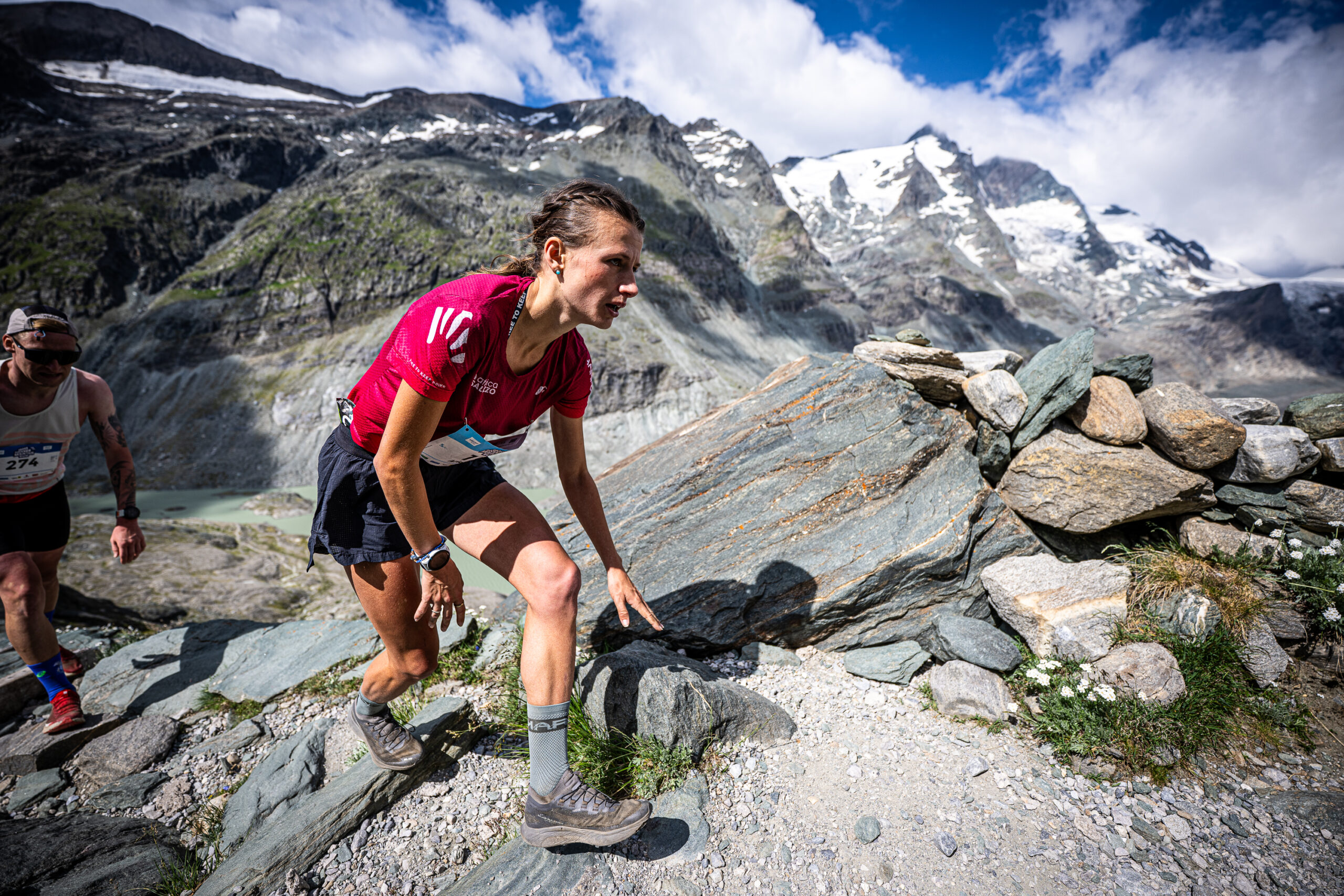
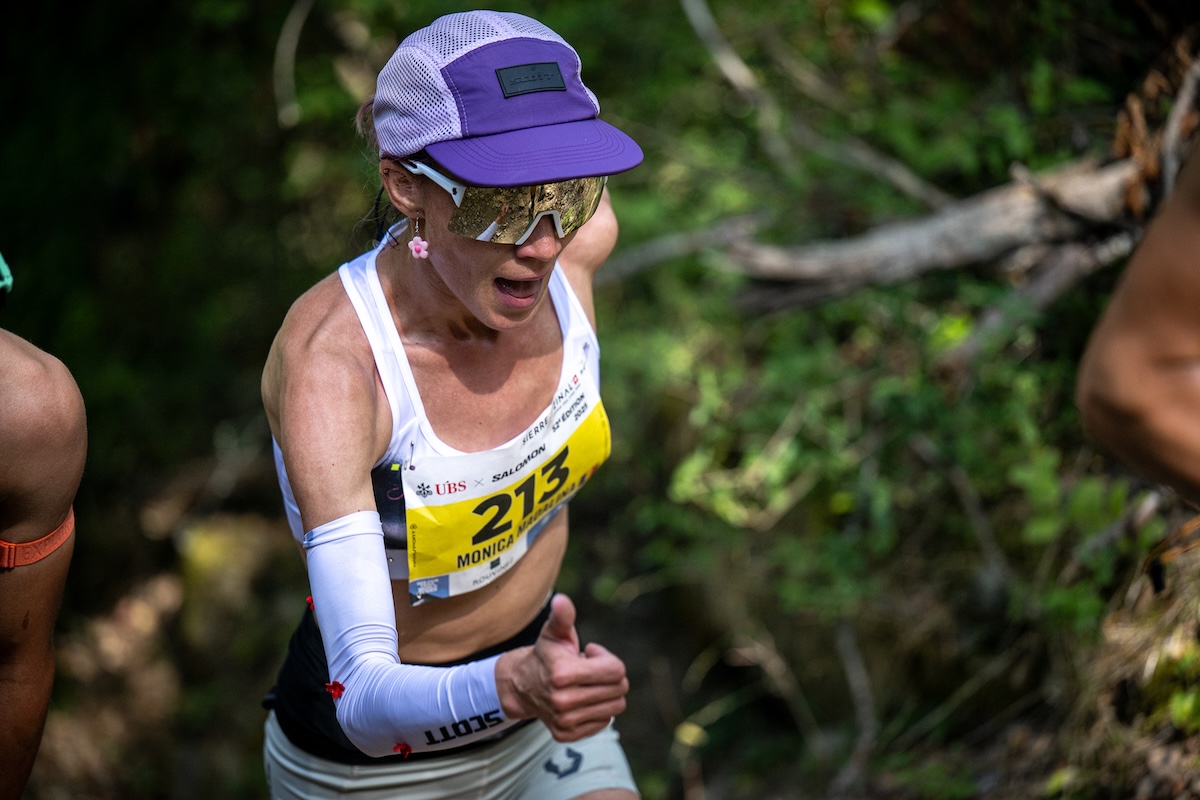
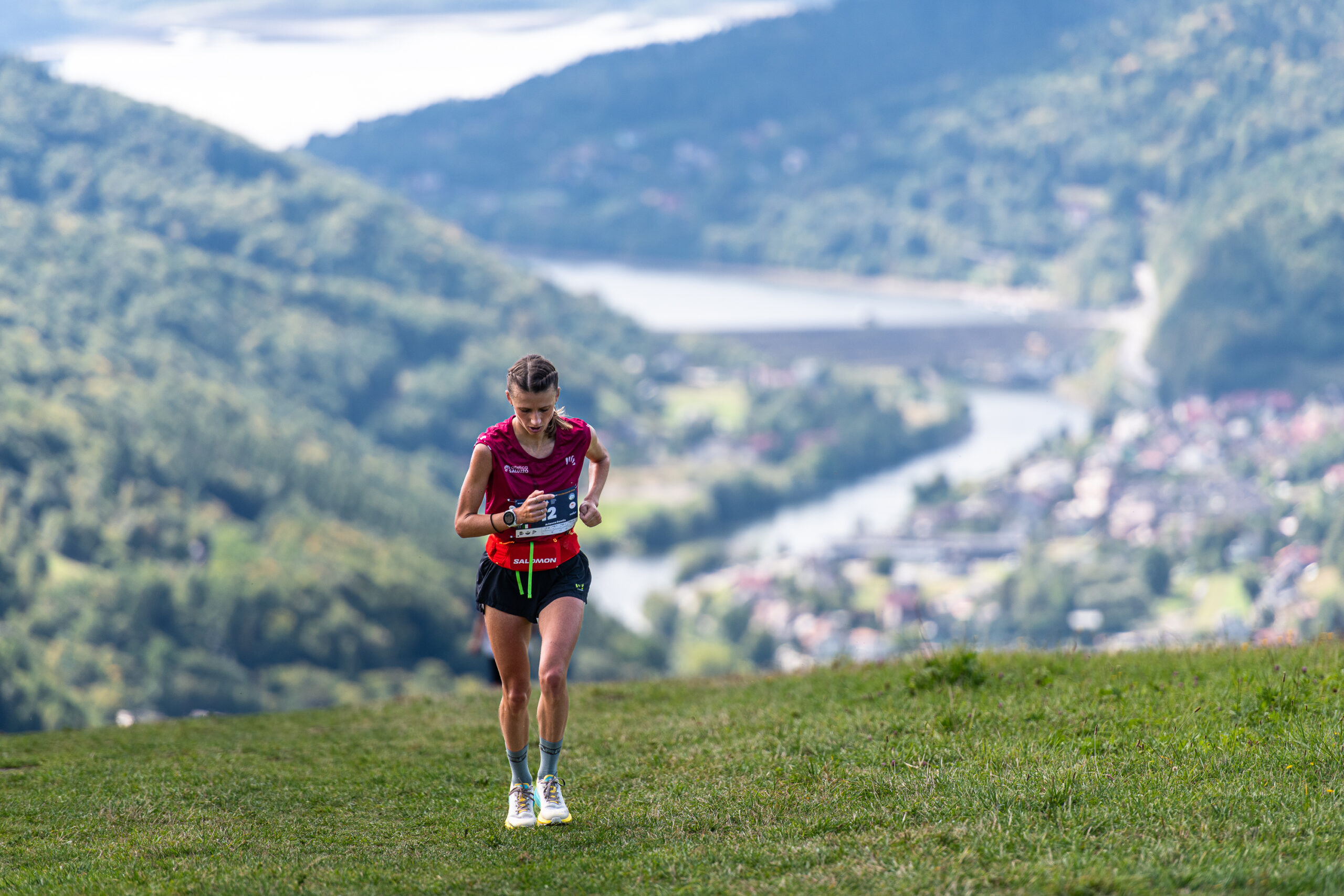
Arianna Dentis (ITA) had waited a long time for this moment. After months of racing across the World Cup circuit, the dedication and persistence behind her season finally carried her to the top step of the podium. She controlled the women’s race from its opening stages and crossed the line in 1:55:03, almost four minutes ahead of Maya Rayle (USA).

Martin Nilsson (SWE) produced an equally authoritative performance in the men’s race. After remaining close to the early pace, he moved clear over the second half of the course and won in 1:38:50, more than three minutes ahead of Finlay Grant (GBR).

The victories also moved both winners up one position in the overall World Cup standings. Arianna Dentis (ITA) climbs to sixth and Martin Nilsson (SWE) moves from ninth to sixth, giving each athlete further momentum before the final World Cup weekend in Canada.

DENTIS TURNS DEDICATION INTO VICTORY

Arianna Dentis (ITA) established control early. At the 7km checkpoint, she already held a lead of more than one minute and 40 seconds over Maya Rayle (USA). From there, Dentis continued to extend her advantage across the repeated climbs and technical descents of Rollercoaster 21.

By the finish in Porąbka, the margin had grown to 3:48.

The victory rewarded a season in which Arianna Dentis (ITA) had already competed at the Broken Arrow Ascent and Broken Arrow Skyrace, Grossglockner Mountain Run, both races at Vauban Mountain Trail, Vertical Nasego and Trofeo Nasego. Poland was her eighth World Cup start of the year and the race in which all that work finally produced her first victory.

For Arianna Dentis (ITA), the finish in Porąbka marked the end of a long wait. Her commitment across several countries, categories and different types of mountain terrain was rewarded with a performance in which she took responsibility for the race from the beginning and never allowed her lead to come under threat.

Maya Rayle (USA) completed an impressive World Cup debut with second place in 1:58:52. Céline Aebi (SUI) secured the final podium position in 2:02:04 surprising even herself with her strong performance.

Eden O’Dea (GBR) finished fourth, closely followed by Natalie Beadle (GBR) in fifth. Rena Schwartz (USA) placed sixth, ahead of Selina Burch (SUI) and Sara Willhoit (GBR).

There was also a home top-10 finish for Izabela Wysluch (POL), who crossed the line ninth. Alicia Shay-Vargo (USA) completed the first 10.


WOMEN’S TOP 10

Position

Athlete

Team or club

Time

1

Arianna Dentis (ITA)

KARPOS–Atletica Saluzzo

1:55:03.9

2

Maya Rayle (USA)

USA

1:58:52.3

3

Céline Aebi (SUI)

LV Langenthal

2:02:04.4

4

Eden O’Dea (GBR)

ACG

2:05:18.7

5

Natalie Beadle (GBR)

Arc’teryx

2:05:57.7

6

Rena Schwartz (USA)

USA

2:06:40.4

7

Selina Burch (SUI)

Lowa Trail Racers

2:06:57.5

8

Sara Willhoit (GBR)

Rab

2:07:20.9

9

Izabela Wysluch (POL)

—

2:12:26.1

10

Alicia Shay-Vargo (USA)

USA

2:12:35.0

MARTIN NILSSON TAKES CONTROL ON THE ROAD TO PORĄBKA

The men’s race developed differently, but the final margin was just as convincing.

Maciej Lachowski (POL) was the quickest runner at the 7km checkpoint, passing through in 31:21. Martin Nilsson (SWE) was only 12.3 seconds behind, well positioned before the course entered its later sequence of climbs and descents.

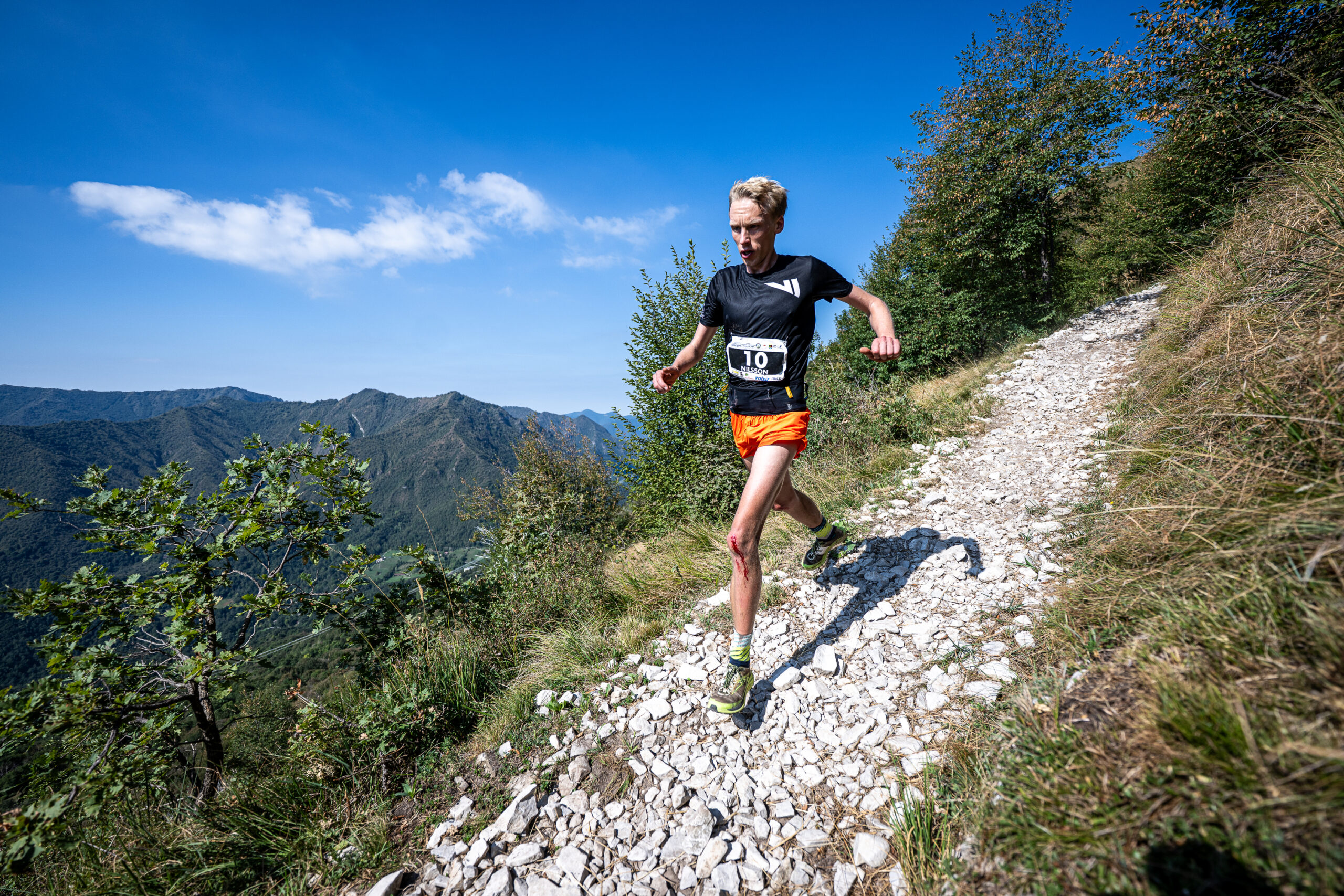
From there, Nilsson took control. His strength across the full course allowed him to move clear of the leading group and build a winning margin of 3:07 by the finish.

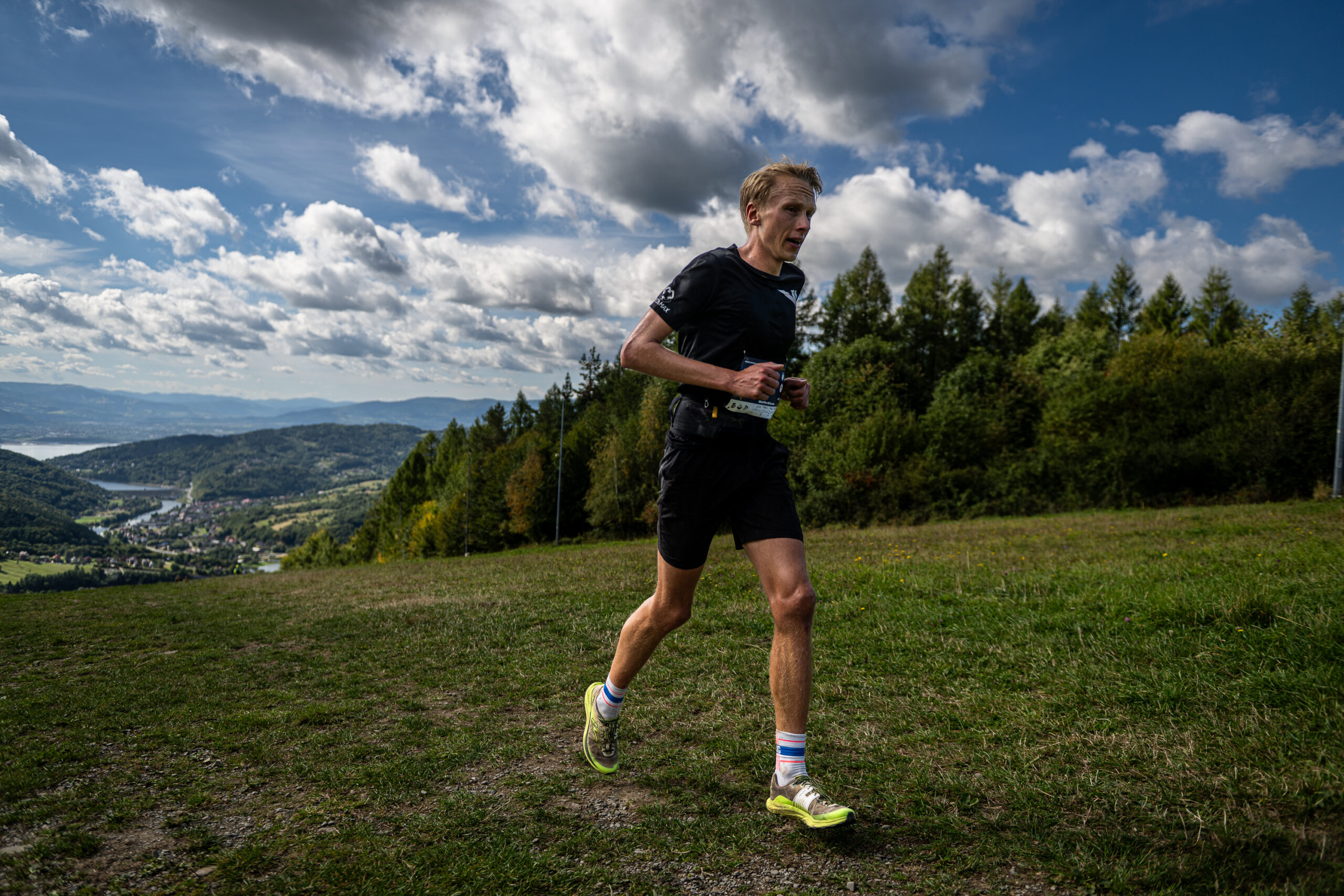
After several strong World Cup performances during the season, including eighth place at Trofeo Nasego, Martin Nilsson (SWE) converted his consistency into his first World Cup victory.

Martin Nilsson at Rollercoaster 21 at Maraton-Trzech-Jezior 2026 Ó WMRA • Marco Gulberti

The closest racing came behind him.

Finlay Grant (GBR) made significant progress during the second half of the course. Sixth at the 7km checkpoint, his strength and confidence on the descents carried him through the field and into second place. He finished in 1:41:58.

Paul Knight (USA) remained close throughout and crossed the line just 5 seconds behind Finlay Grant (GBR), taking third in 1:42:02. Paul Knight (USA) brought 28-minute 10,000m credentials to Poland and demonstrated that speed on the track could be transferred to a demanding mountain course of steep climbs and technical descents.

Luca Merli (ITA) finished fourth, ahead of Pavol Orolin (SVK). Maciej Lachowski (POL), who had led at the checkpoint, was the first Polish runner home in sixth.

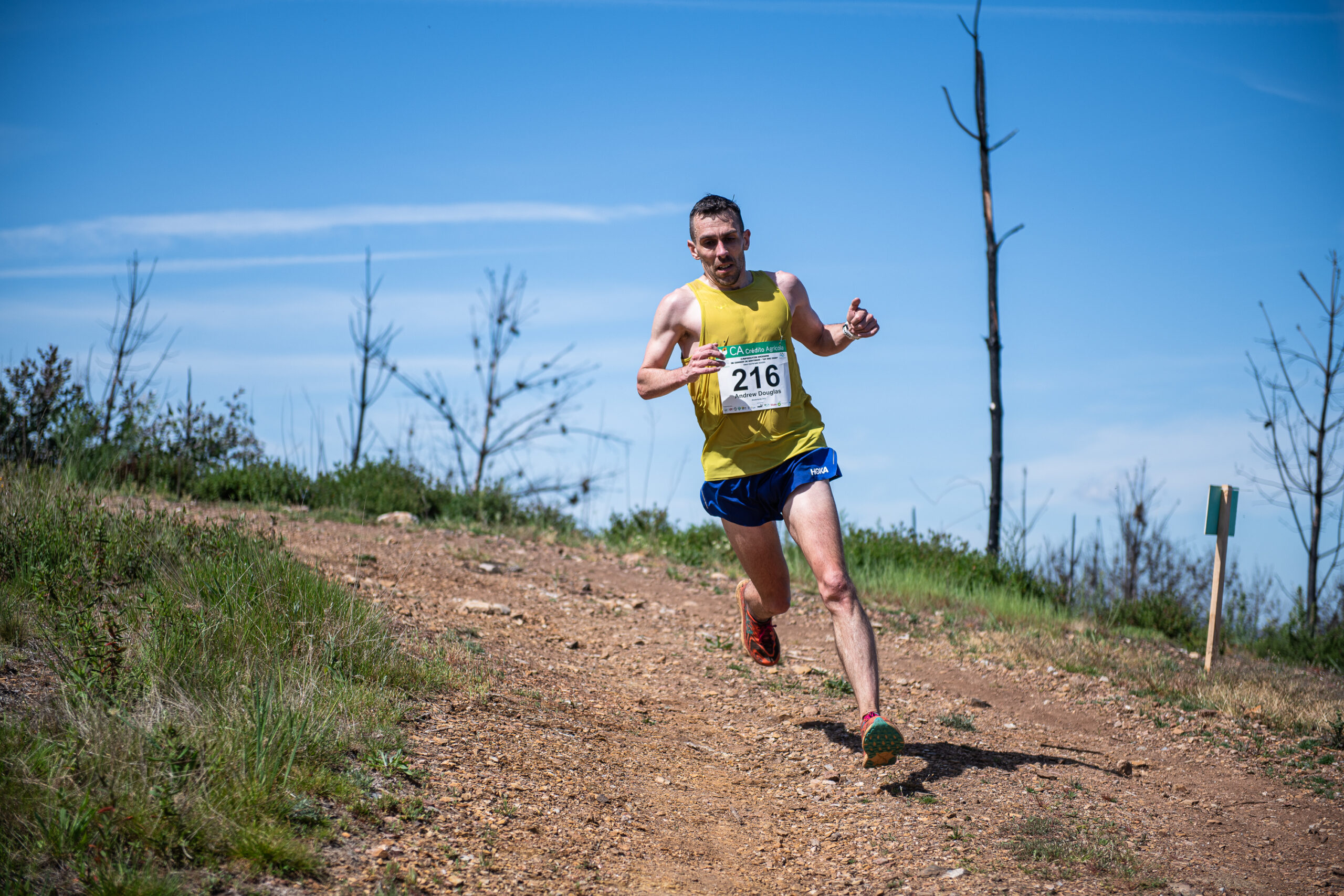
Oscar Subuh-Symons (GBR) placed seventh, followed by Casey Campbell (USA). Andrew Douglas (GBR) and Karol Matyssek (POL) completed the men’s top 10.

MEN’S TOP 10

Position

Athlete

Team or club

Time

1

Martin Nilsson (SWE)

IFK Umeå/VJ

1:38:50.2

2

Finlay Grant (GBR)

Scarpa

1:41:58.0

3

Paul Knight (USA)

USA

1:42:02.9

4

Luca Merli (ITA)

JOMA TRAIL

1:45:17.0

5

Pavol Orolin (SVK)

Sportovna/Salomon

1:45:50.4

6

Maciej Lachowski (POL)

Klub MONTANZA-Salomon

1:47:53.0

7

Oscar Subuh-Symons (GBR)

—

1:48:14.0

8

Casey Campbell (USA)

USA

1:48:28.1

9

Andrew Douglas (GBR)

Westerlands CCC

1:50:54.2

10

Karol Matyssek (POL)

K.S. Sprint Bielsko-Biała

1:50:59.1

INTERNATIONAL QUALITY STRENGTHENS THE FIELD

The United States team brought real quality to the Long Distance final, but the strength of the field extended well beyond one nation, with six nationalities represented in the men’s top 10 and five in the women’s.

Maya Rayle (USA) finished second and Paul Knight (USA) secured third, while Rena Schwartz (USA), Alicia Shay-Vargo (USA) and Casey Campbell (USA) also placed inside the top 10.
POLISH MEADOWS AND UNFORGIVING CLIMBS

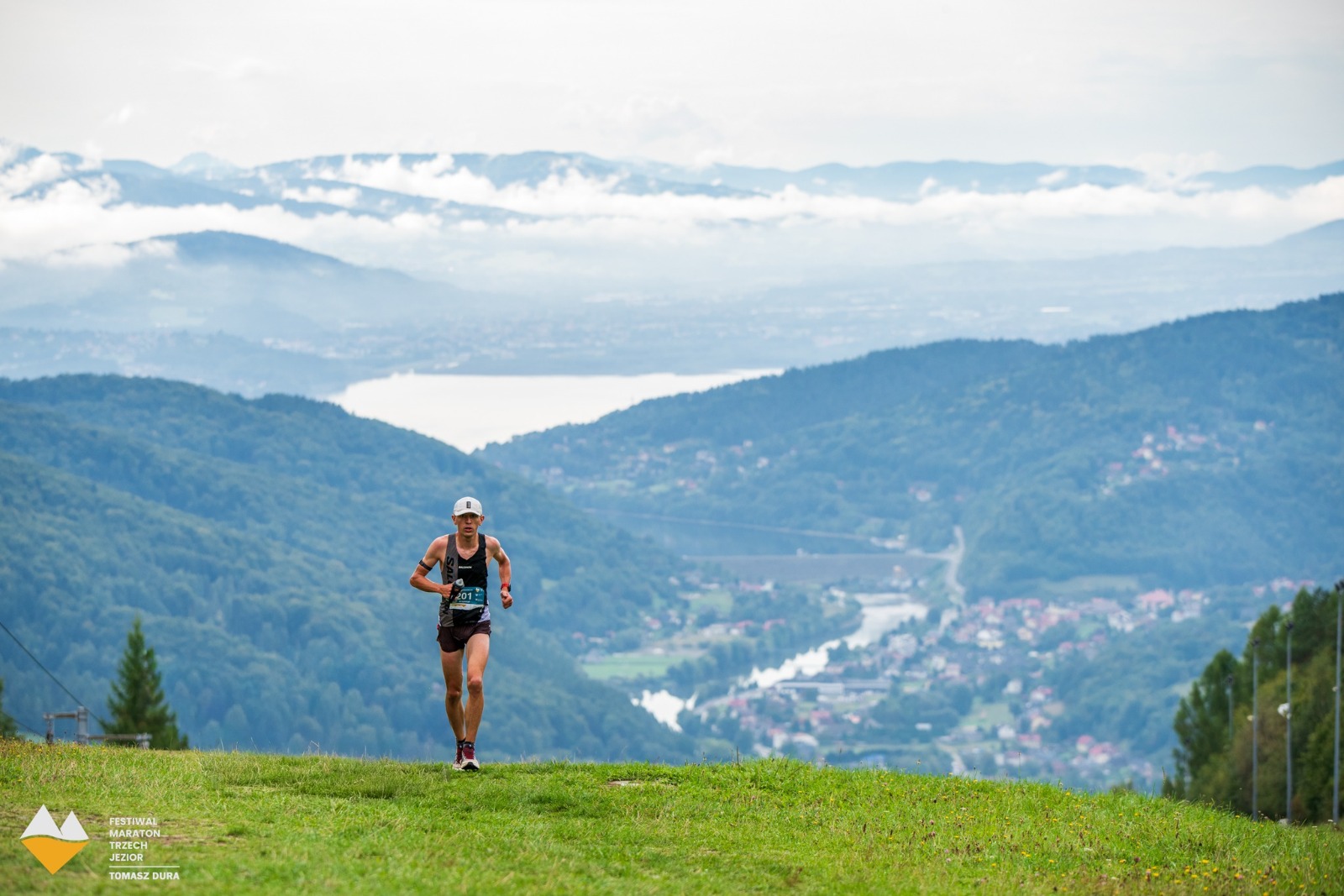
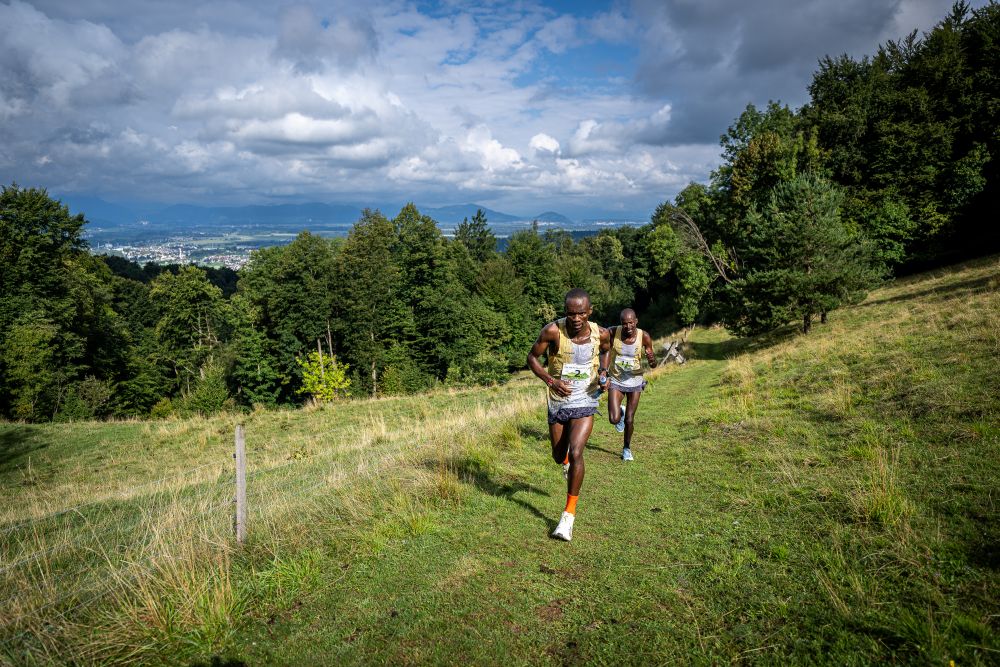
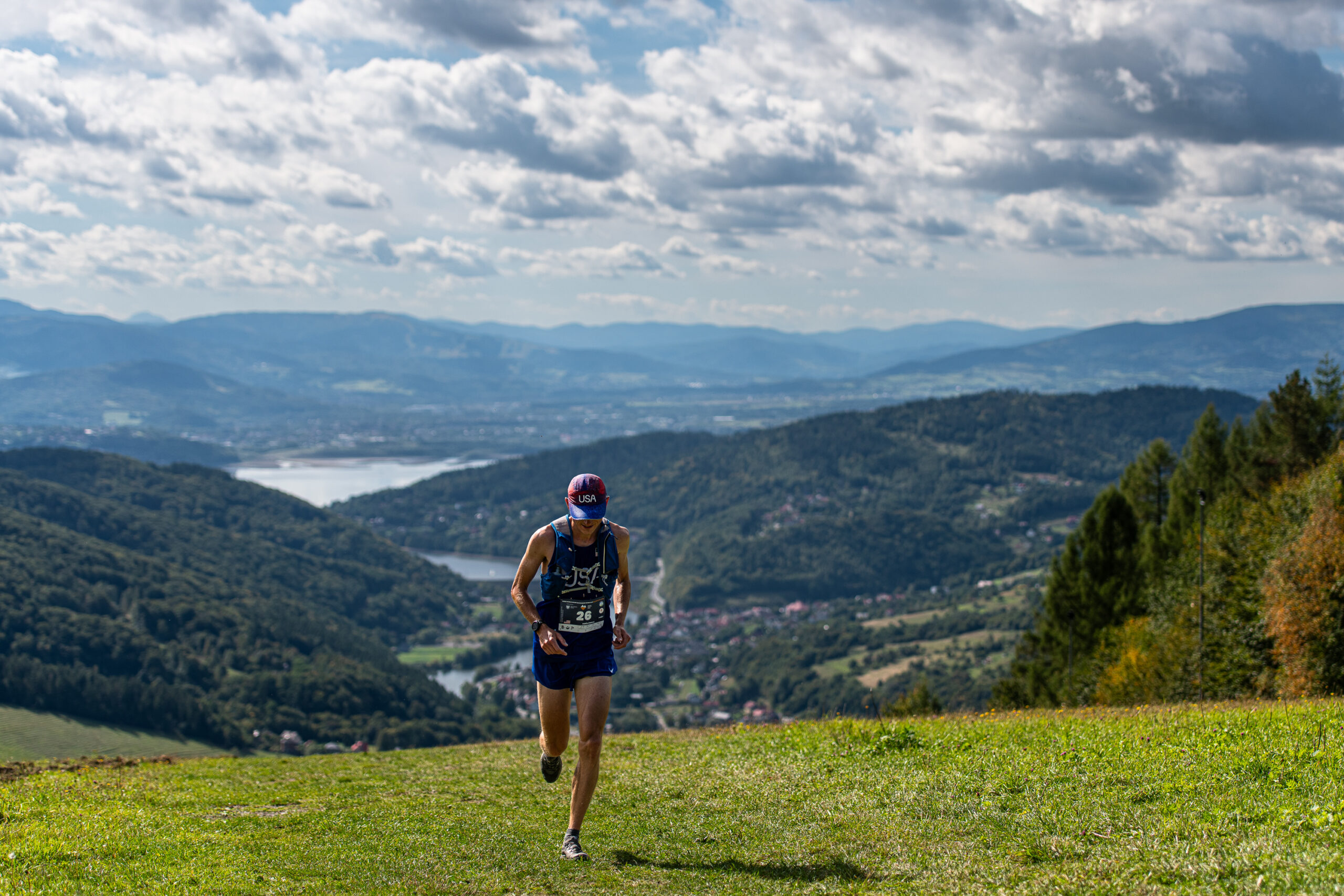
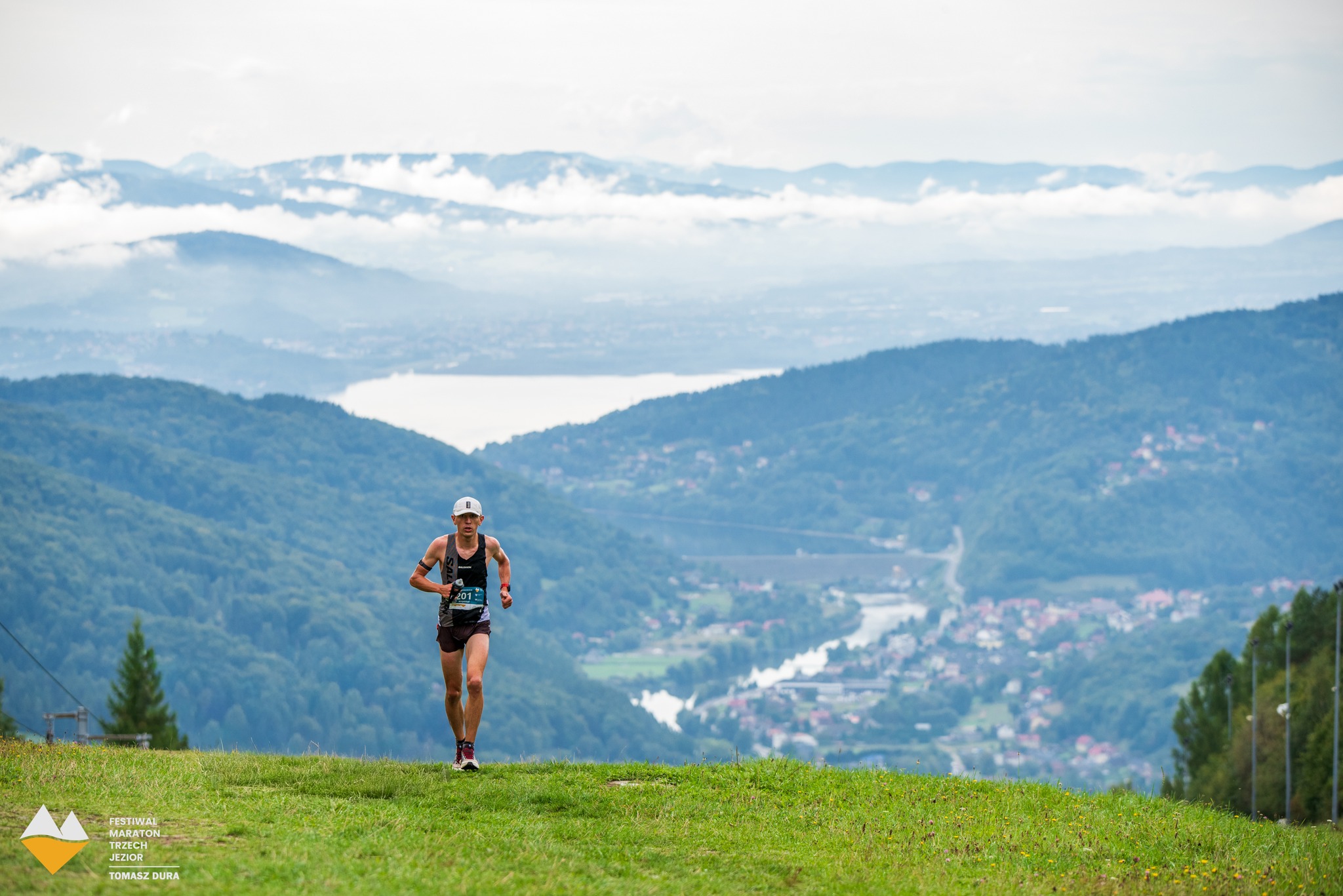
Beautiful weather opened up views across the meadows, forests and lakes of the Beskid Mały. The landscape reflected the character of Poland’s middle mountains: welcoming and open in places, but crossed by gradients and technical trails that gave the race a much harder edge.

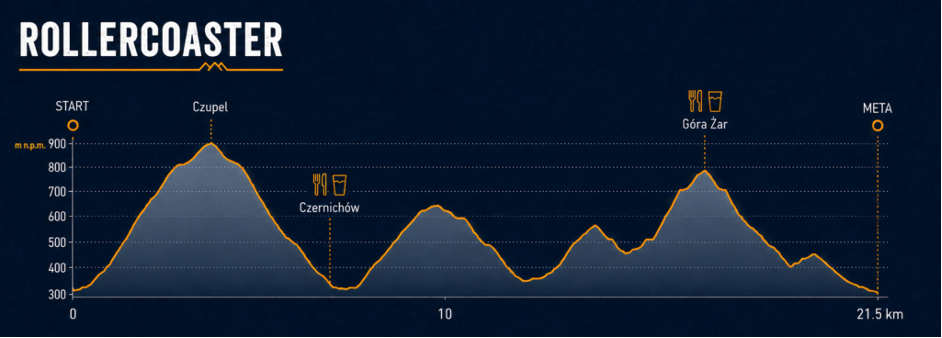
Rollercoaster 21 covered 21.6km with 1,511m of ascent. From the start in Międzybrodzie Bialskie, the runners climbed more than 500m during the opening three kilometres towards Czupel.

A long and technically demanding descent then carried the race towards Czernichów. After crossing the Soła River, the course began climbing again, eventually reaching one of its defining sections on the way towards Mount Żar.
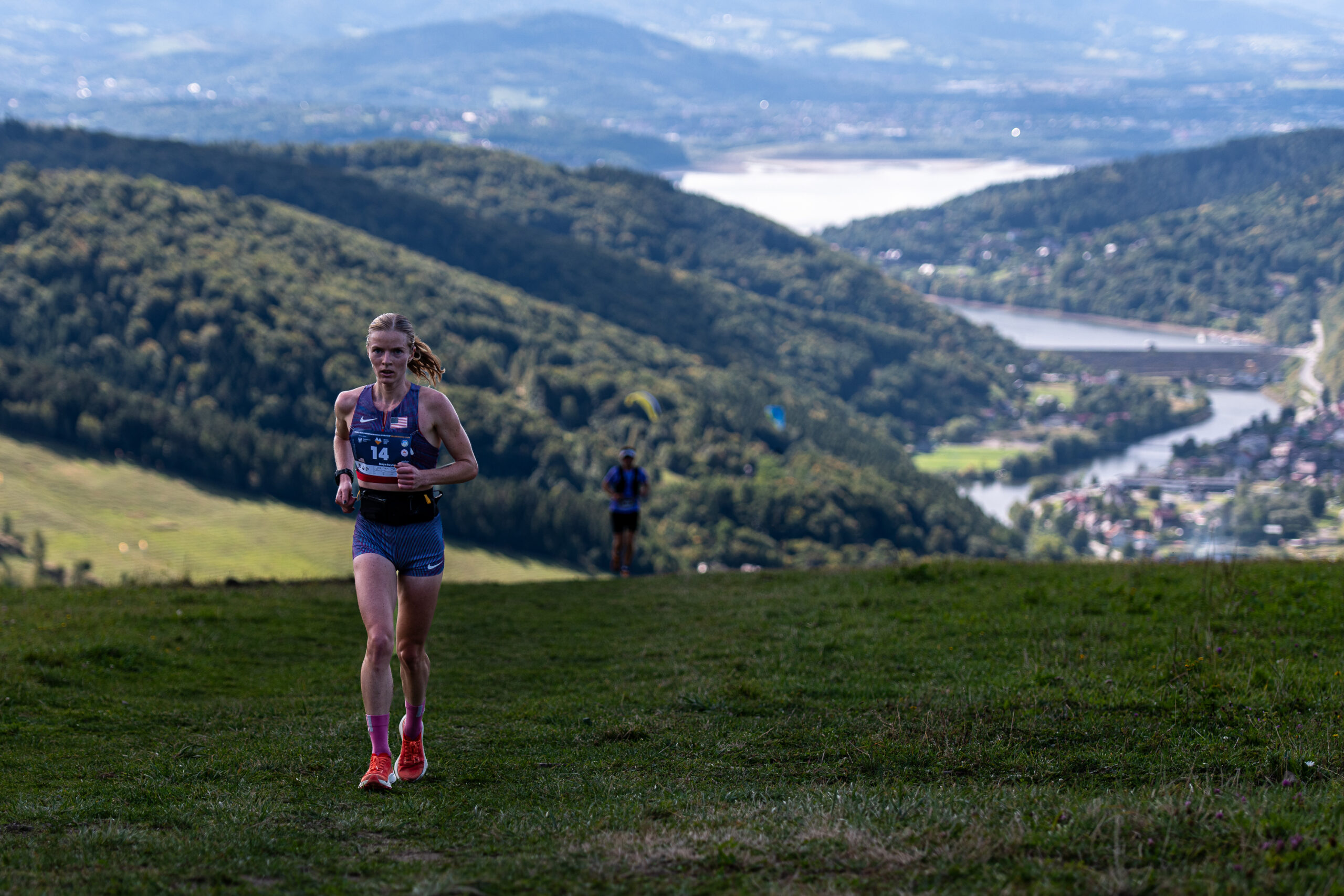
The constant changes of gradient made it difficult for the athletes to establish a steady rhythm. Strong climbing alone was not enough. The runners also needed the confidence to descend quickly, the control to move efficiently across the technical sections and enough strength for the final approach to Porąbka.

The Three Lakes Marathon festival provided a distinctly Polish setting for the World Cup. Open meadows, wooded slopes, steep trails and views across the lakes placed the international field within a landscape closely connected to the area’s outdoor culture.

THE LONG DISTANCE SEASON ENDS AS THE WORLD CUP LOOKS TOWARDS CANADA

Rollercoaster 21 was the 14th race of the World Cup season, which has already visited Portugal, China, Spain, the United States, Austria, France, Switzerland and Italy.

It was also the fifth and final Long Distance race of the year, following Transvulcania Half Marathon, Broken Arrow Skyrace, Sierre-Zinal and Trofeo Nasego.

The overall World Cup now moves to Défi des Couleurs in Canada on 10–11 October. The Uphill final will take place on Saturday, followed by the Up & Down final on Sunday.

Arianna Dentis (ITA) and Martin Nilsson (SWE) will arrive in Canada higher in the overall standings. More significantly, they will arrive as World Cup winners for the first time.

IN MOUNTAIN RUNNING WE TRUST.
 

Continue reading

ROLLERCOASTER 21 TO DECIDE THE WORLD CUP LONG DISTANCE TITLE IN POLAND

ROLLERCOASTER 21 TO DECIDE THE
WORLD CUP LONG DISTANCE TITLE IN POLAND

The Three Lakes Marathon festival welcomes the Rollercoaster 21 on 19 September,
with category standings and overall World Cup positions at stake.
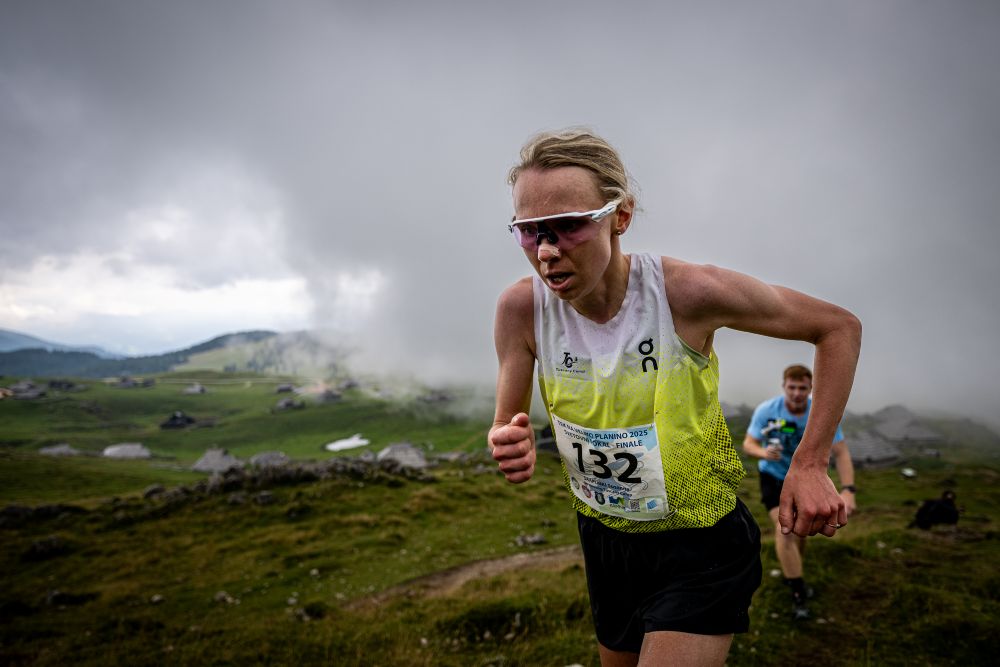
After travelling through Portugal, China, Spain, the United States, Austria, France, Switzerland and Italy, the WMRA Mountain Running World Cup reaches Poland for race 14 of the 2026 season. On Saturday, 19 September, the Three Lakes Marathon festival will host the final race of the Long Distance category on the Rollercoaster 21 course.

From the Transvulcania Half Marathon to Broken Arrow, Sierre-Zinal and Trofeo Nasego, the Long Distance season has already taken runners through four very different mountain-running races. The last one comes in the Beskids, where repeated climbs, technical descents and constant changes of rhythm will decide the final category standings.

Poland will close the Long Distance competition, but not the World Cup itself. The season will continue in Canada in October with the Uphill and Up & Down finals and the final decisions in the overall standings.

FROM THE WORLD STAGE TO THE BESKID LAKES

The Three Lakes Marathon takes place in the western Beskid Mały mountains, with the Soła River running between wooded slopes and a landscape shaped by both nature and local history. Stone shepherds’ huts and a former forest amphitheatre remain part of the area’s heritage, while Mount Żar has become an important centre for outdoor sport, attracting runners, cyclists and paragliders.

The festival itself grew from a simple request from runners. After taking part in the Frassati Mountain Run, many wanted more distances and more ways to discover the surrounding trails. That connection with the running community remains central to the event today.

As summer begins to give way to autumn, the World Cup now joins that wider festival atmosphere for its first visit to Rollercoaster 21.

A TRUE MOUNTAIN-RUNNING ROLLERCOASTER

The name gives a fair indication of what awaits.

Rollercoaster 21 covers 21.6km, with 1,511m of ascent and 1,543m of descent, starting at 10:00 in Międzybrodzie Bialskie and finishing at Porąbka stadium. There is little time on the course for runners to settle into a comfortable rhythm.

The opening three kilometres climb more than 500m towards Czupel, immediately putting pacing under pressure. From there, a demanding descent drops towards Czernichów before the course crosses the Soła River on a suspension bridge and begins building again towards Mount Żar.

One of the decisive sections could come on that ascent, where approximately 250m are gained in a single kilometre alongside the ski lift. Even then, the climbing is not finished. After descending towards Kozubnik, another short ascent interrupts the run towards Porąbka before the final approach to the stadium.

The challenge will not simply be how quickly the athletes can climb, but how well they can repeatedly change from climbing to descending and back again. An aggressive opening could be expensive later, particularly for anyone unable to recover on the descents, while runners who move efficiently downhill and still have enough strength when the road turns upwards again may find themselves gaining places deep into the race.

WORLD CUP CONTENDERS ON THE START LINE

The Long Distance final brings together athletes with different objectives but the same immediate target: a strong result in Porąbka.

For some, the category standings remain very much in play. Others arrive with their attention also on the overall World Cup, knowing that Poland can strengthen their position before the final rounds in Canada. Alongside them are athletes capable of challenging for the race podium regardless of their position in the season-long competition.

Poland’s Urszula Paprocka and Matyssek Karol will have the chance to race a World Cup on home ground, while Natalie Beadle and Spain’s Marc Bernades Olle are among the other notable entries. With a course that rarely allows the field to settle, the final should leave plenty of room for the race to develop well beyond the opening climb.

WOMEN TO WATCH

After two fourth-place finishes this season, Arianna Dentis (ITA) arrives in Poland still chasing her first World Cup podium of 2026. She has been close at both Vauban Mountain Trail and Trofeo Nasego, and Rollercoaster 21 gives her another opportunity to turn that consistency into a place in the top three.

But this is far from a two-woman contest. Natalie Beadle (GBR) is another athlete with the potential to challenge for the podium, while the depth of the field means there should be little room for mistakes across a course as demanding as Rollercoaster 21.

Sara Willhoit (GBR) returns to Long Distance racing after already scoring at the Transvulcania Half Marathon earlier in the season. Poland gives her another chance to finish the category strongly while adding to an overall World Cup campaign that continues beyond this weekend.

Selina Burch (SUI), Ingrid Mutter (ROU) and Eden O’Dea (GBR) add further World Cup experience to the field. Together with Dentis and Willhoit, all women sit inside the overall World Cup top 30, giving the final another layer beyond the competition for the race podium itself.

Once the race begins, however, the standings will matter less than how the athletes handle the course. The opening ascent should begin separating the field, but Rollercoaster 21 offers few places where an early advantage can be considered safe. The descent, the crossing of the Soła and the hard climb towards Żar all offer opportunities for the order to change before the final kilometres into Porąbka.

MEN TO WATCH

Martin Nilsson (SWE) has one of the clearest World Cup objectives in the men’s field. He arrives ninth overall and fourth in the Long Distance standings with 56 points, 16 behind the current third-place total.

That leaves a Long Distance podium within reach, although the equation does not depend on Nilsson alone. He will need the result in Poland while also watching where his closest rivals finish.

The race itself brings plenty of competition beyond the category standings. Spain’s Marc Bernades Olle and Polish Matyssek Karol are among the athletes expected to place towards the front, while Finlay Grant (GBR) adds further strength to the field.


Andrew Thomas Douglas (GBR) and Luca Merli (ITA) arrive with the wider World Cup season still firmly in focus. Douglas sits inside the overall top 10 and Merli just outside it, making the points available in Poland important before both turn their attention towards the final races in Canada.

Gyorgy Szabolcs Istvan (ROU) and Oscar Subuh-Symons (GBR) are also inside the overall top 30, while Paul Knight (USA) returns to the Long Distance competition having already scored at Broken Arrow. Rollercoaster 21 gives Knight one final opportunity to improve his category position before those standings are closed for the season.

On a course with such frequent changes of terrain, however, positions on paper will only tell part of the story. The first climb may reveal who wants to dictate the race, but the repeated descents and ascents that follow should favour patience as much as aggression. By the time the athletes reach the later stages of the course, the strongest runner may be the one who has managed those changes best.

A SEASON TO INSPIRE RESPONSIBLE MOUNTAIN RUNNING

The World Cup travels from one mountain community to another, but the purpose extends beyond elite competition. Every stop offers a different landscape, culture and way of experiencing mountain running, made possible by the local communities who open their trails and welcome the athletes.

That comes with responsibility from everyone who uses those environments.

As the Long Distance season reaches its conclusion in Poland, Rollercoaster 21 offers both sides of that story: international competition at the highest level and another mountain landscape waiting to be discovered responsibly.

RACE INFORMATION AND COURSE DETAILS

https://www.maraton3jezior.com/en/rollercoaster/

DESTINATION AND FESTIVAL BACKGROUND

https://www.maraton3jezior.com/en/festival/

WMRA MOUNTAIN RUNNING WORLD CUP 2026 STANDINGS

https://www.wmra.info/wmra-world-cup/

Continue reading

KIRIAGO BREAKS MEN’S TROFEO NASEGO RECORD AS GITONGA TAKES WOMEN’S CROWN

Kiriago Breaks Men’s Trofeo Nasego Record as Gitonga Takes Women’s Crown

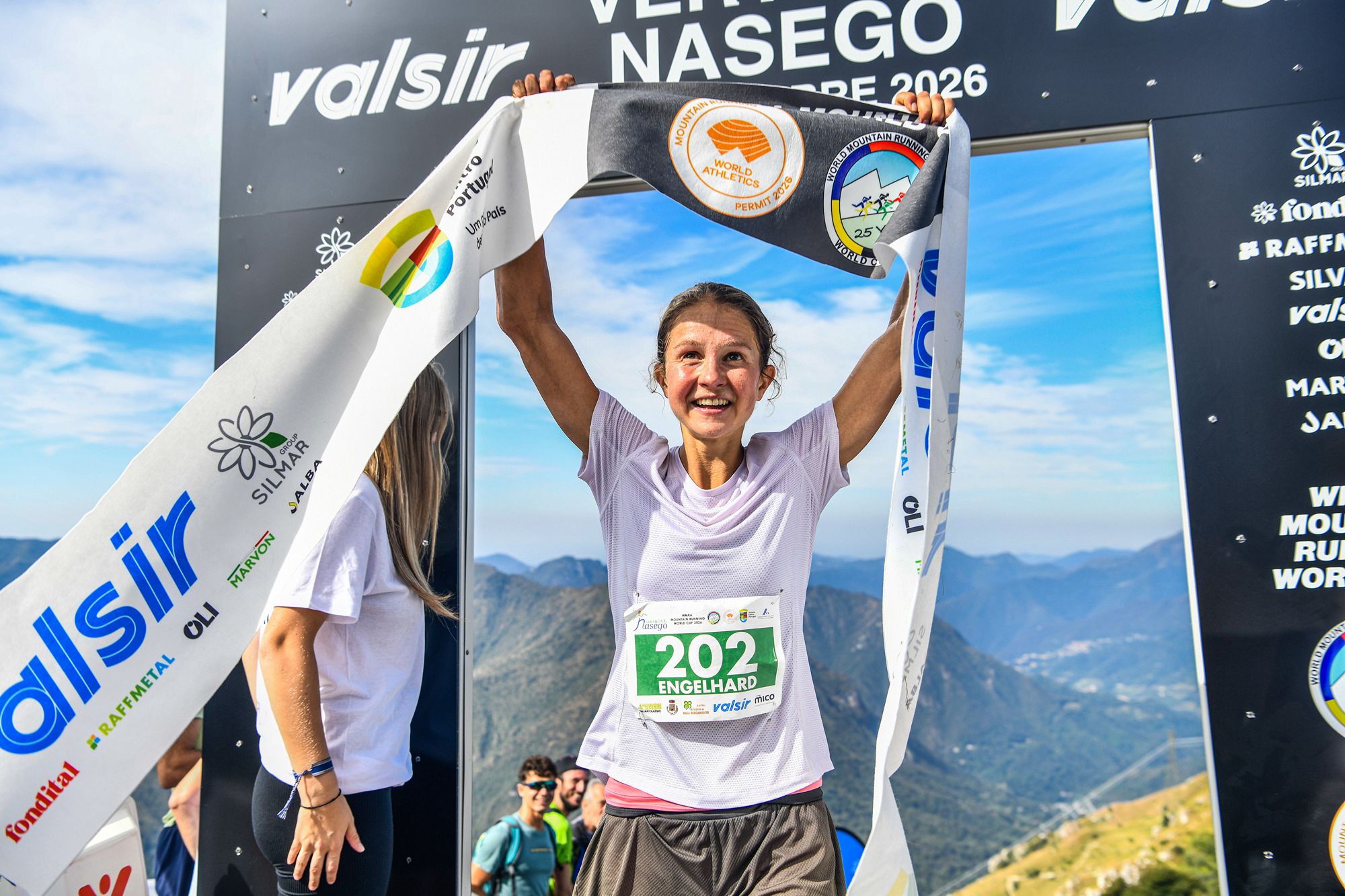
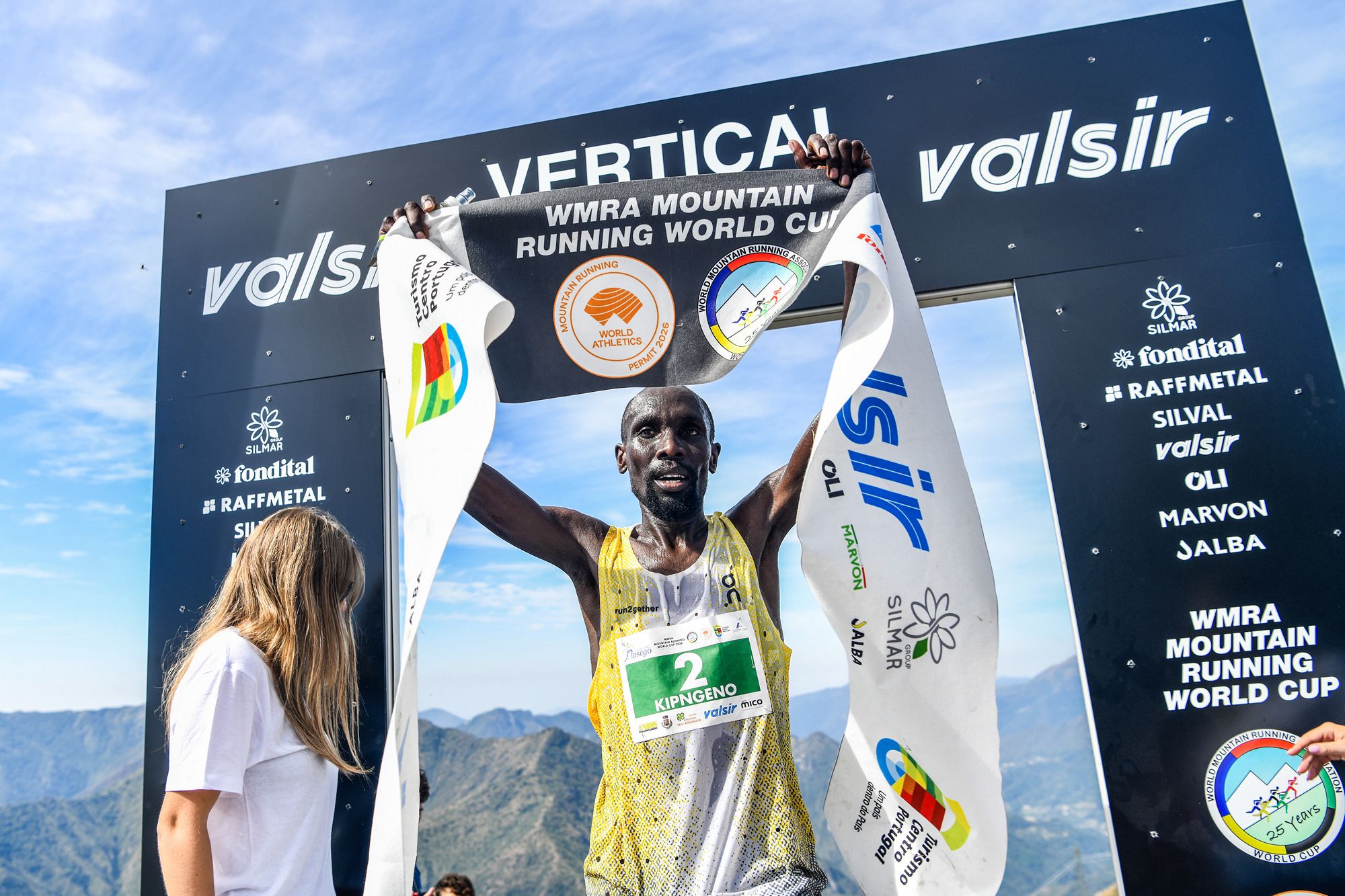
After an exciting Vertical Nasego the previous day, won by Nina Engelhard and Patrick Kipngeno, attention turned to the 25th edition of Trofeo Nasego. With many of the same athletes lining up for both races, there was little doubt that Stage 13 of this year’s World Cup would be fiercely contested.

Trofeo Nasego has steadily grown in stature over the years, becoming a regular fixture on the international mountain running calendar and playing host to both Italian Championships and World Cup races. This year’s field reflected that status, bringing together reigning and former World and European champions, World Cup winners and leaders, alongside a new generation of athletes looking to make their mark.

All eyes were on Casto as the field gathered, on another hot day, for one of the most established races on the mountain-running circuit.

The course

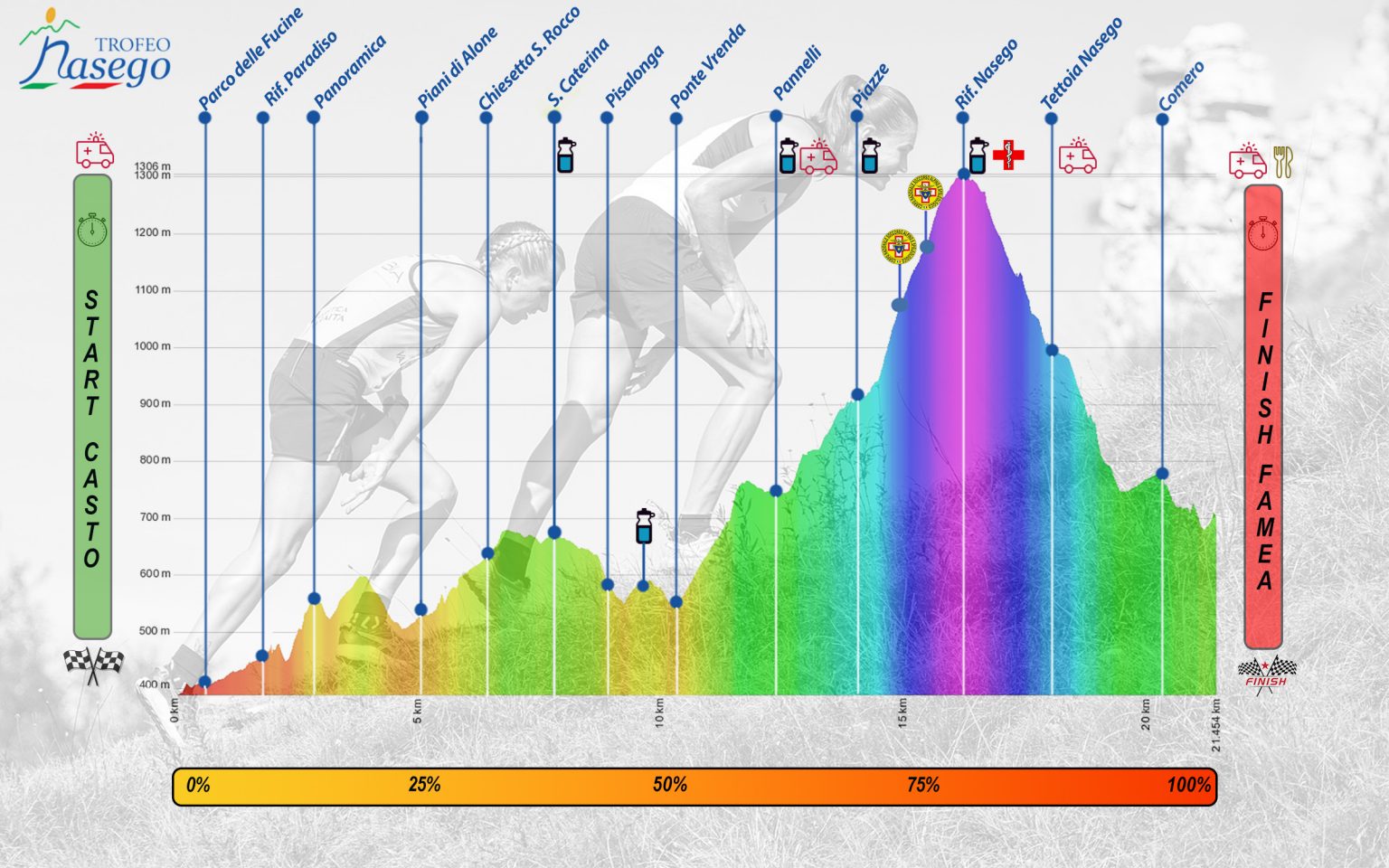
This 21.5km route has something for every runner. The crux of the race is the climb of over 700 metres from Ponte Vrenda up to Rifugio Nasego (1300m).This climb starts at the 10km point and gets steeper until it reaches the rifugio at 16km. What begins as a fairly fast rolling first 10km on good trails, which can create some early gaps, changes completely as the runners reach the long, sustained climb.

And if the long climb plays to the strength of the uphill specialists, the 4km downhill section with technical sections to the finish at Famea will be an advantage to others. Trofeo Nasego is a hugely tactical race and to win here you really do have to have it all – speed on the rolling sections, strong climbing skills and technical downhill abilities.

The men’s race

There were two clear favourites in the men’s race – Patrick Kipngeno and Philemon Kiriago (both KEN) were two all in last four years of the race – but the field ready to challenge was deep. As we saw yesterday in Vertical Nasego, Italians can benefit from home advantage here and we sometimes see a runner for the first time in the World Cup come in and create shockwaves. Kipngeno came into this race as the course record holder (1.30.46, set in 2022) but would it survive this year of exceptional competition?

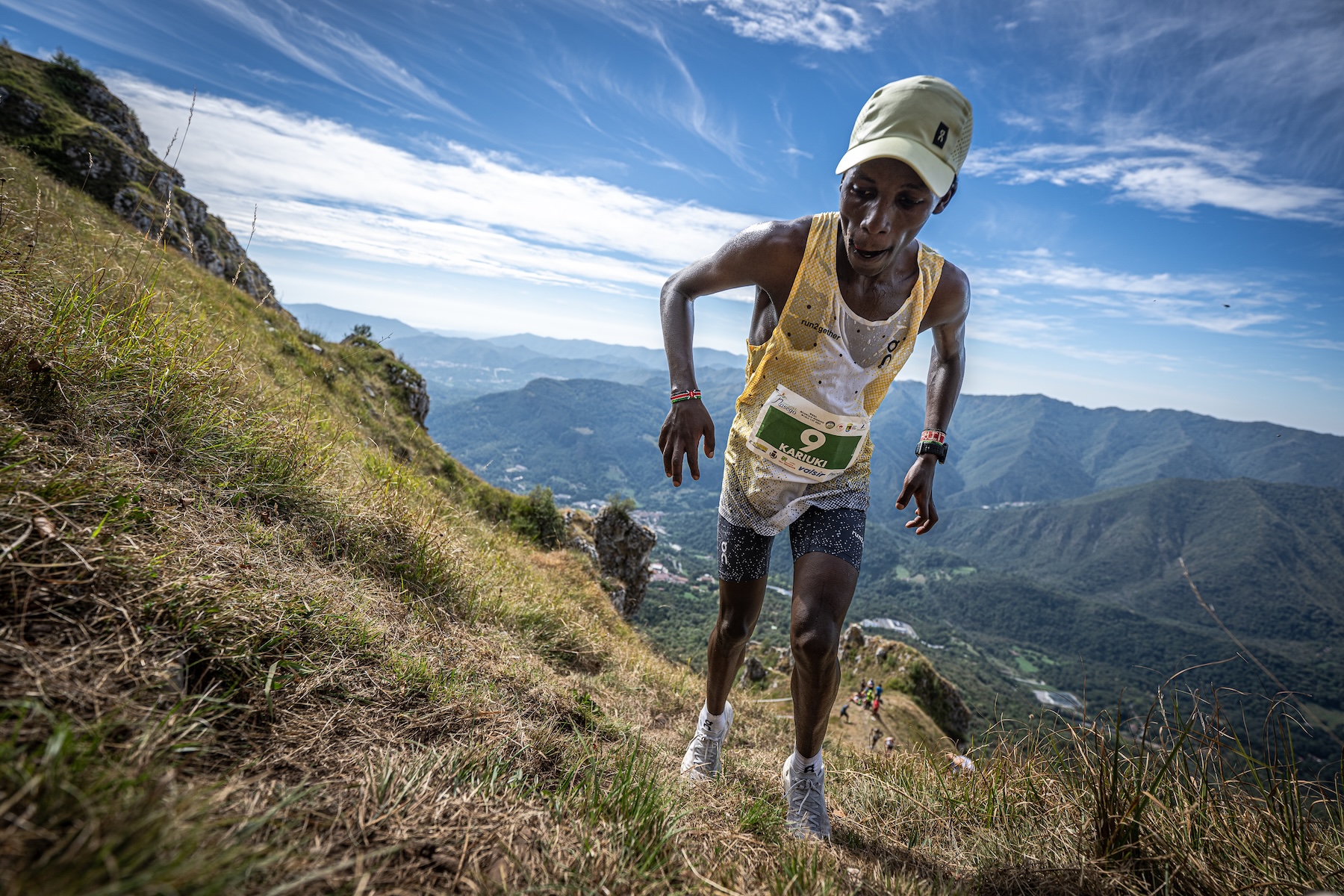
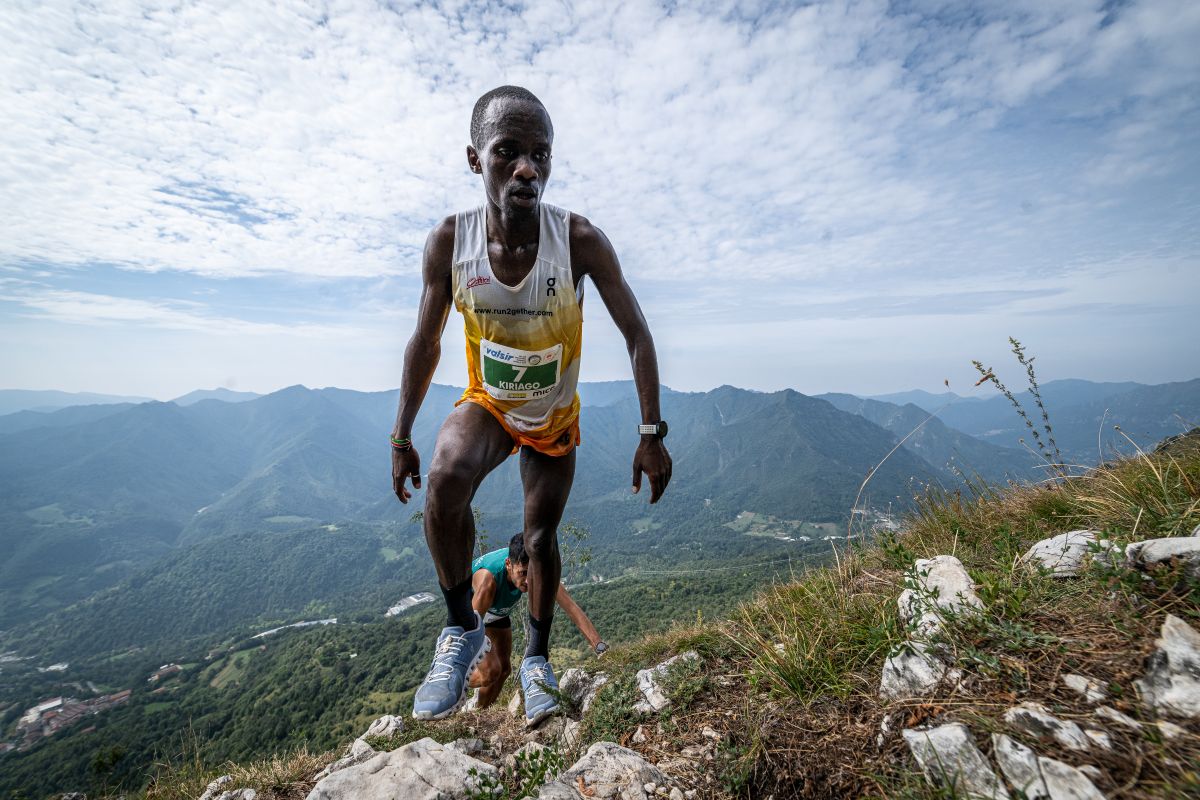
Kiriago decided to set his stall out early and lead from the front. He arrived at the Piani di Alone 6km mark ahead of Elija Kamau Kariuki (KEN), one of the breakout stars of this year’s World Cup, with Michael Selelo Saoli (KEN) in third. At this point Kipngeno was in fourth, with fellow Kenyan runner Ephantus Njeri in fifth.

By Pannelli, the checkpoint at 11km, which comes just before the runners begin the big climb to Rifugio Nasego in earnest, the men’s top five remained the same with very little separating them. As expected, it was going to come down to the climb and descent.

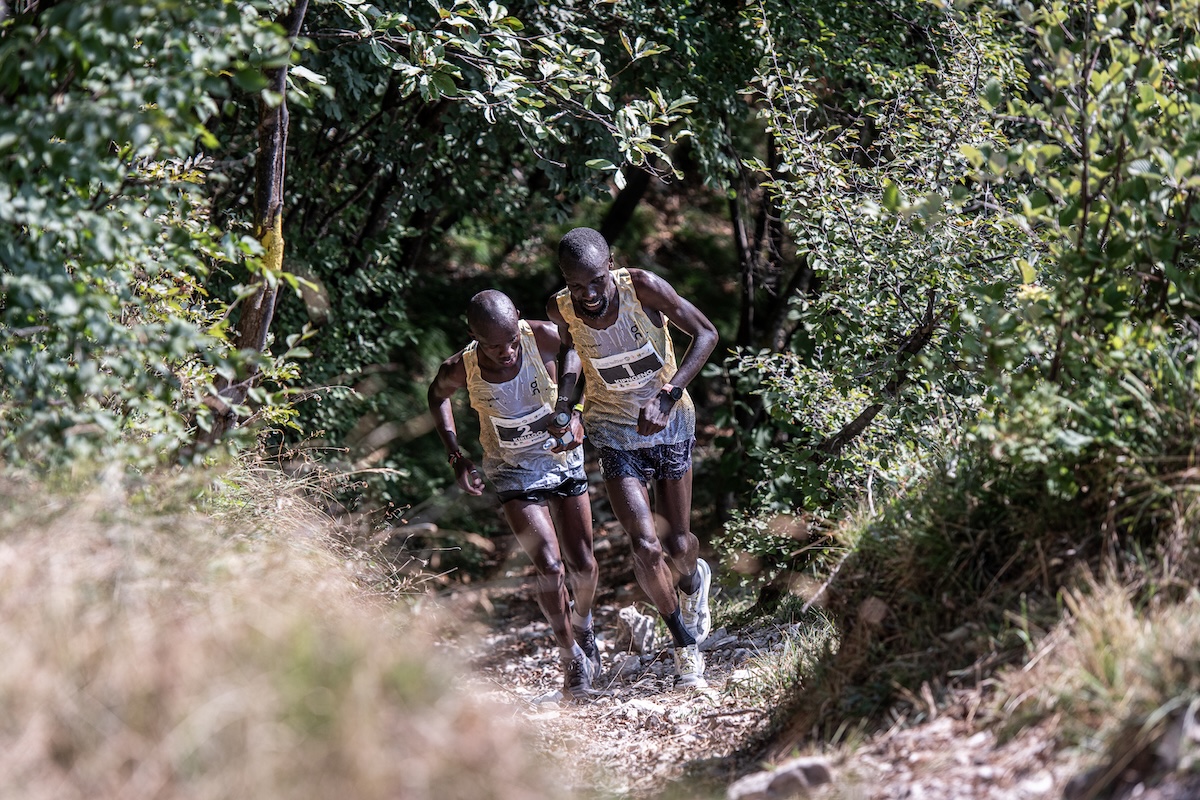
As they reached Rifugio Nasego Kipngeno had made his move, arriving just a few seconds behind Kiriago. Paul Machoka (KEN) had also moved up into fifth. At the start of the 4km downhill a minute separated the men’s top three, so it was still very open.

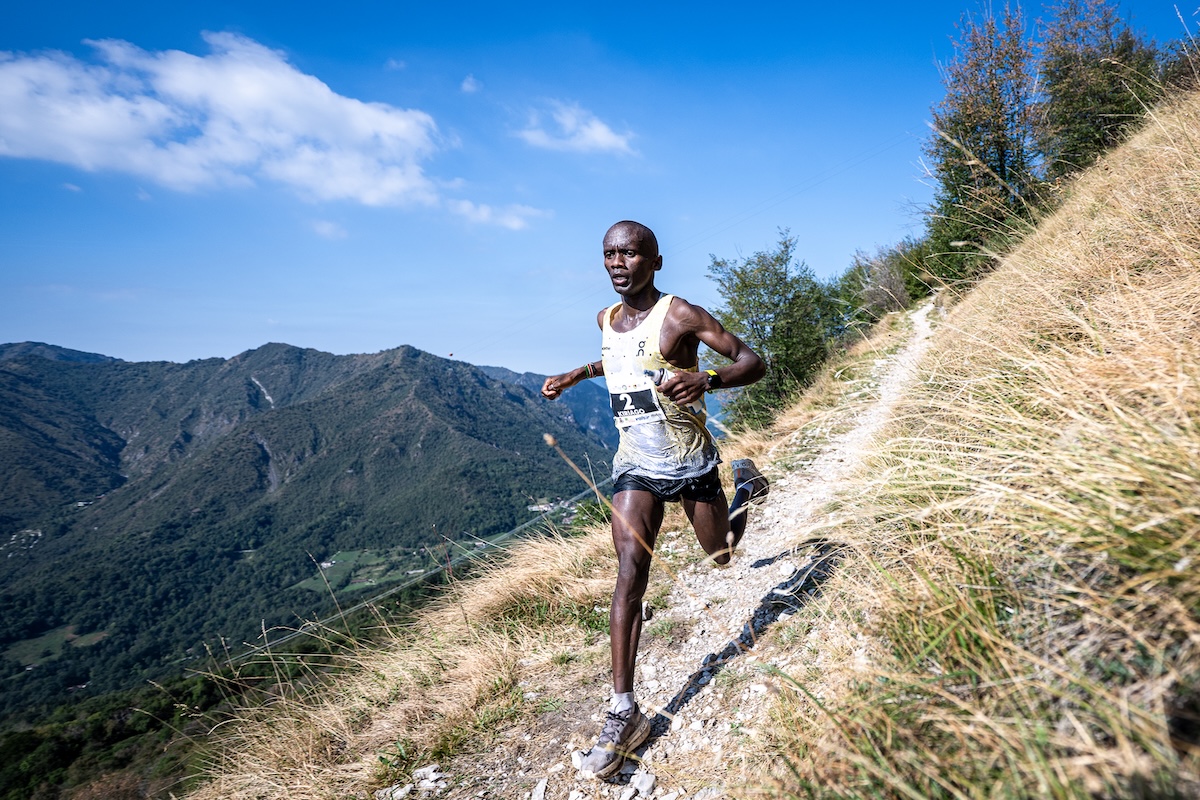
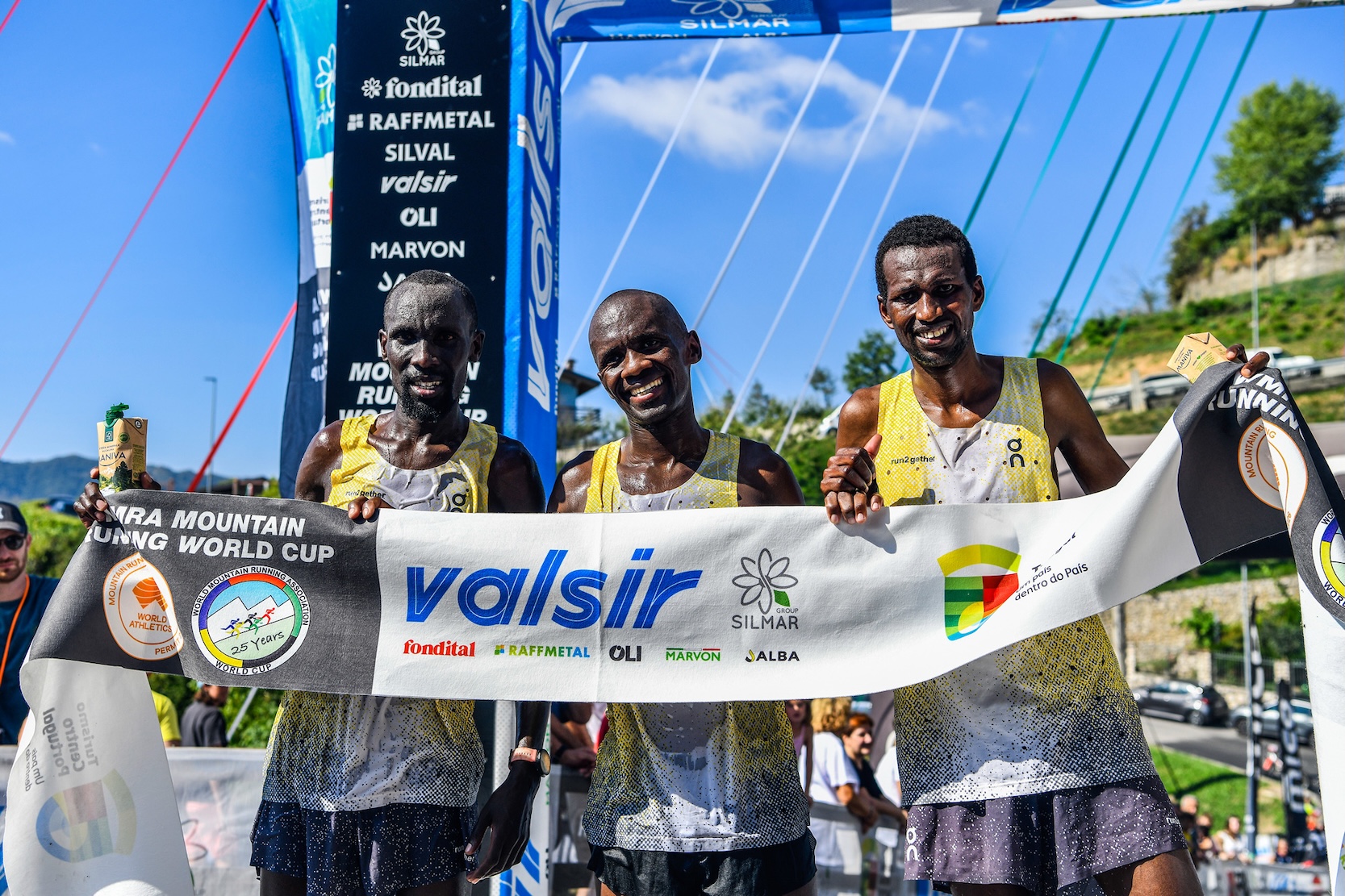
Eventually Kiriago reached the finish line at Famea first, breaking Kipngeno’s course record to win in 1.30.08. Kipngeno held onto second (1.31.10) and Saoli held off the challenge from Kariuki and Machoka to keep third. Afterwards Kiriago said, “I was dreaming about breaking the course record and I’ve managed today to break it”.

Men’s top 5

  1. Philemon Kiriago (KEN/Run2Gether On Trail) – 1.30.08
  2. Patrick Kipngeno (KEN/Run2Gether On Trail) – 1.31.10
  3. Michael Saoli (KEN/Run2Gether On Trail) – 1.32.13
  4. Elijah Kariuki (KEN/Run2Gether On Trail) – 1.33.11
  5. Paul Machoka (KEN/Atletica Saluzzo) – 1.34.43

The women’s race

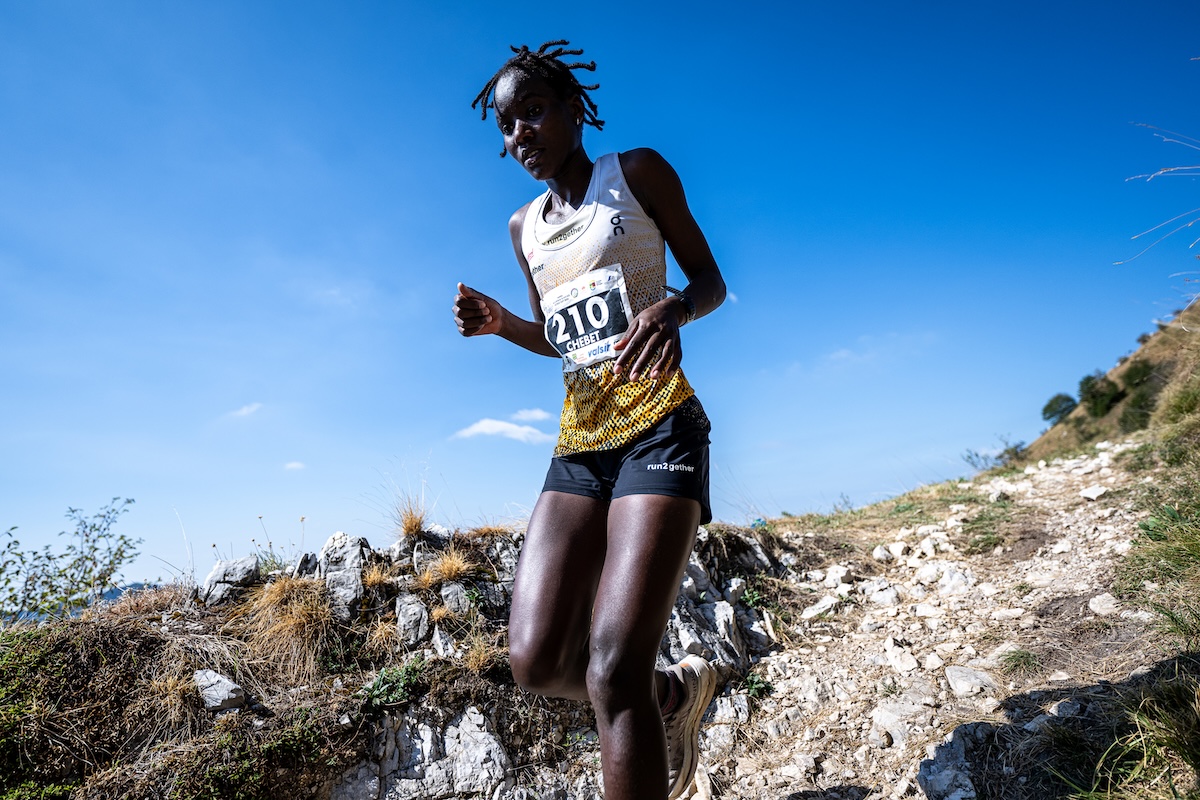
World Cup leader Ruth Mwihaki Gitonga (KEN) has won every classic race she has entered in the competition this year, so she is hard to bet against, but here she was taking on the current World Champion in the discipline, Nina Engelhard(GER). Gitonga actually finished second to Engelhard in that classic race at the World Championships last year. We saw from yesterday’s win at Vertical Nasego that Engelhard is back to fitness after an injury, so it was going to be an interesting contest, particularly given the depth of the field which included two-time winner Andrea Mayr (AUT), Vertical Nasego’s runner-up Kirsty Skye Dickson (GBR), and top Kenyan runners Miriam Chepkirui ,Joyce Muthoni Njeru and Gloria Chebet, among many others.

Gitonga struck out for the front early and at the 6km point at Piani di Alone she was chased by Engelhard, with Chepkirui, Njeru and Chebet making up the top five.

Before the start of the major climb, at Pannelli at 11km, this top five was unchanged, but Chebet had overtaken Njeru. We knew from Vertical Nasego that Engelhard is back to full strength on the uphills and possibly had the edge here. And this was an interesting section of the race, really shaking up the women’s field.

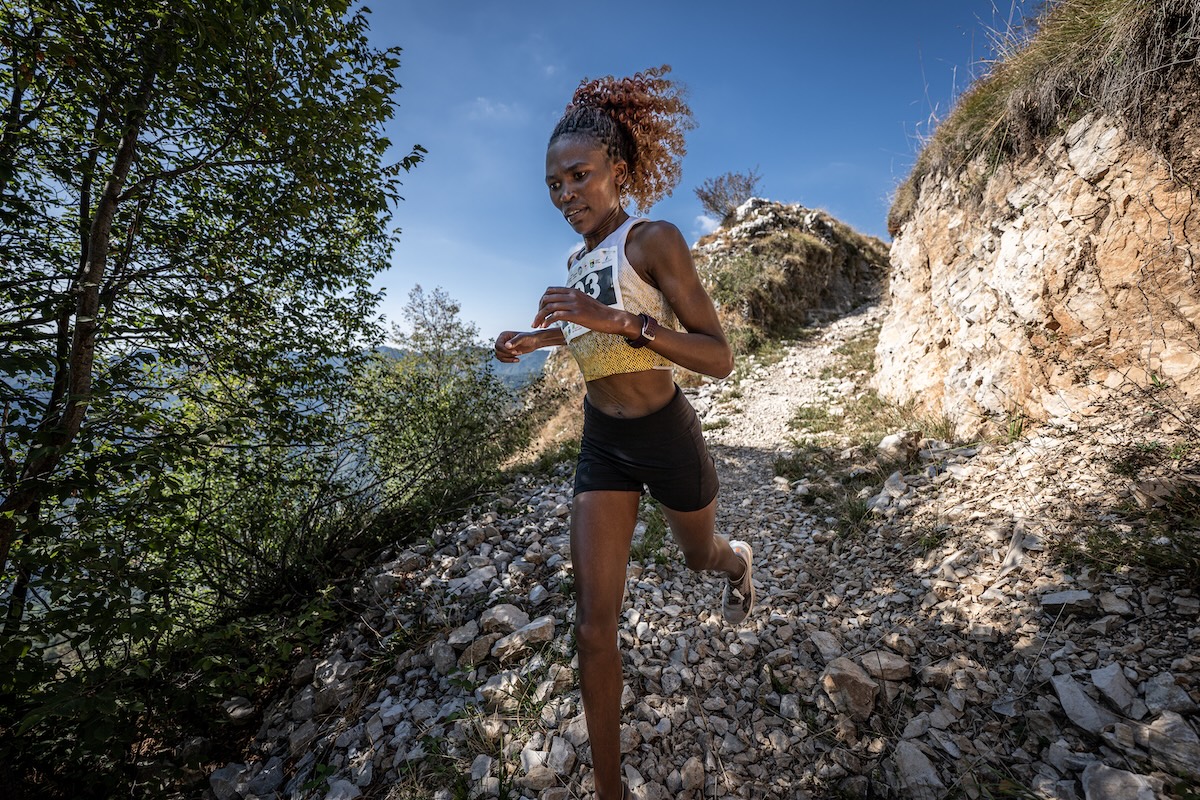
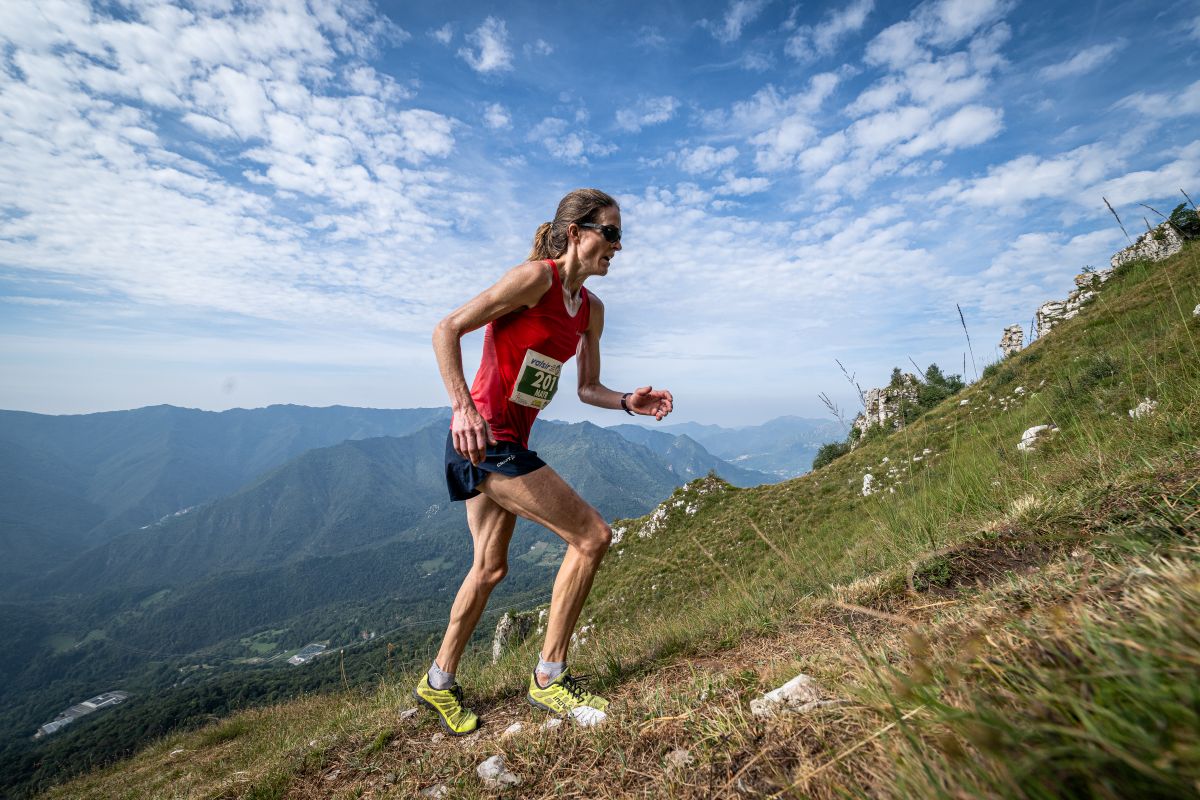
Gitonga emerged at Rifugio Nasego (16.5km) first, and she had in fact managed to keep a 22 second buffer to Engelhard. Chepkirui remained in third but by this point she was two minutes behind Gitonga and Engelhard and it was starting to look unlikely that she could catch them. Skye Dickson had made her move on the climb, arriving in fourth place just over a minute behind Chepkirui, and Arianna Dentis (ITA), who has had good results at Grossglockner and Vauban this year, had come through to fifth. Mayr had also moved up and was in the mix at the summit.

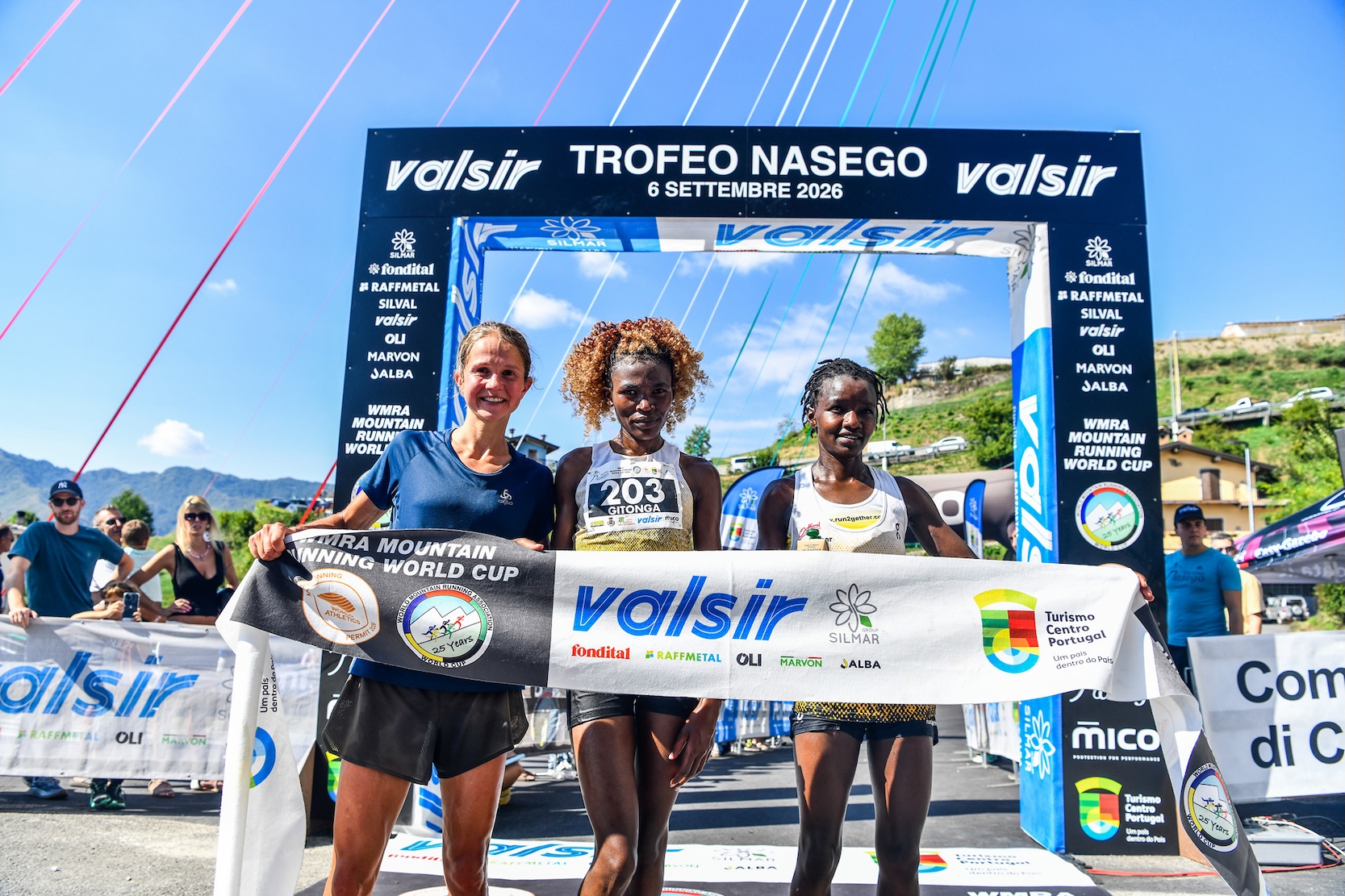
The last, long downhill was to prove more decisive in the women’s race than in the men’s. Engelhard didn’t manage to close the gap and Gitonga won in 1.47.06, with Engelhard taking second in 1.47.33. Chepkirui maintained her third place. Dentis continued to push, finishing in fourth, with Chebet fifth.

Women’s top five

  1. Ruth Mwihaki Gitonga (KEN/Run2Gether On Trail) – 1.47.06
  2. Nina Engelhard (GER/PSV Grun-Weiss Kassell) – 1.47.33
  3. Miriam Chepkirui (KEN/Run2Gether On Trail) – 1.50.14
  4. Arianna Dentis (ITA/Atletica Saluzzo) – 1.52.51
  5. Gloria Chebet (KEN/Run2Gether On Trail) – 1.53.12

The World Cup now heads to Poland on 19th September for our last long distance race of the competition: Maraton Trzech Jezior: Three Lakes Marathons.

Continue reading

ENGELHARD RETURNS FROM INJURY TO WIN AND KIPNGENO TAKES FOURTH TITLE AT VERTICAL NASEGO

Engelhard Returns from Injury to Win and Kipngeno Takes Fourth Title at Vertical Nasego


Casto, Italy hosted the opening leg of a demanding double-header this weekend, with Vertical Nasego serving as stage 12 of the WMRA World Cup before stage 13 follows on tomorrow at Trofeo Nasego. Conditions matched the intensity of the racing, with temperatures climbing into the 30s and testing athletes across both fields.

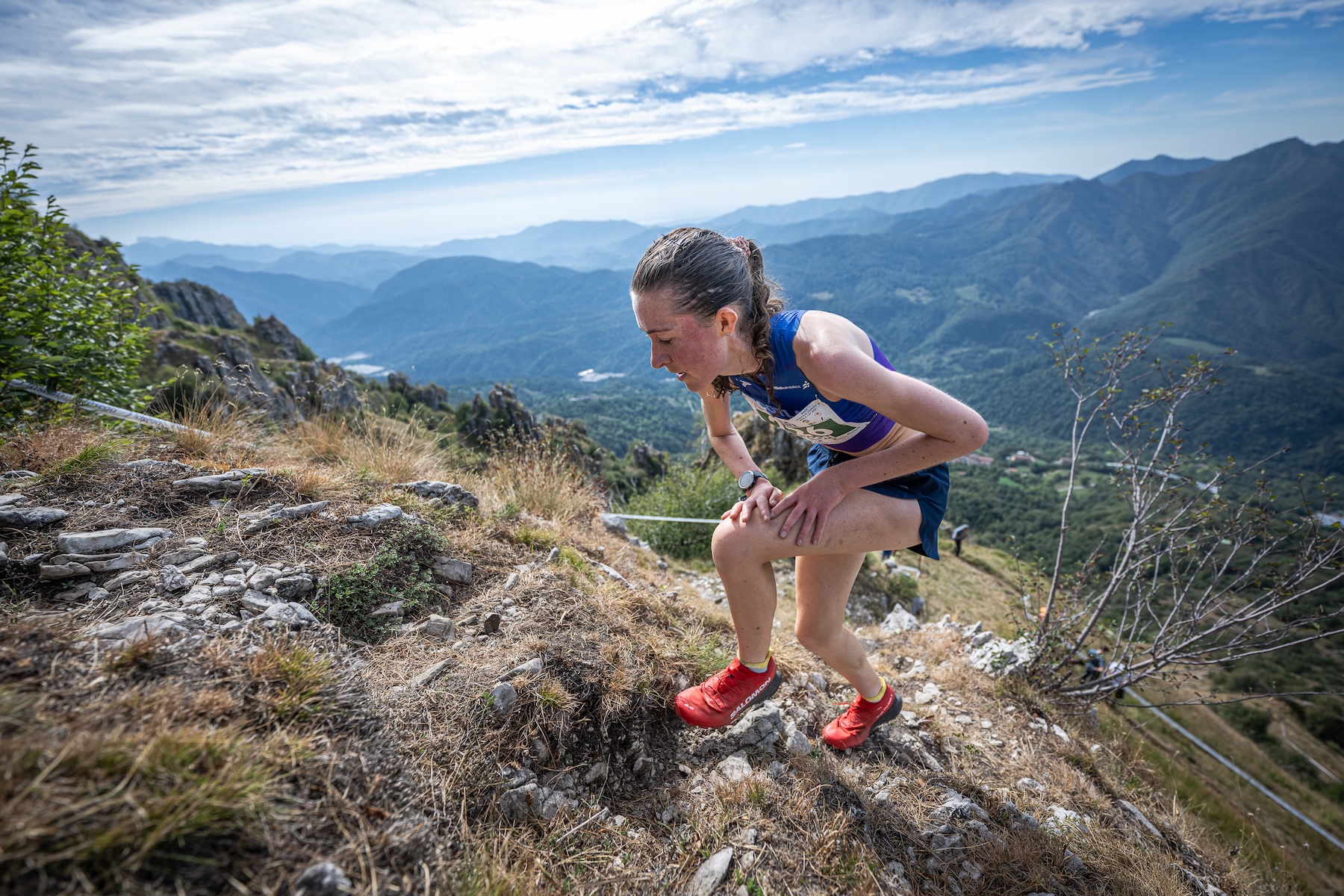
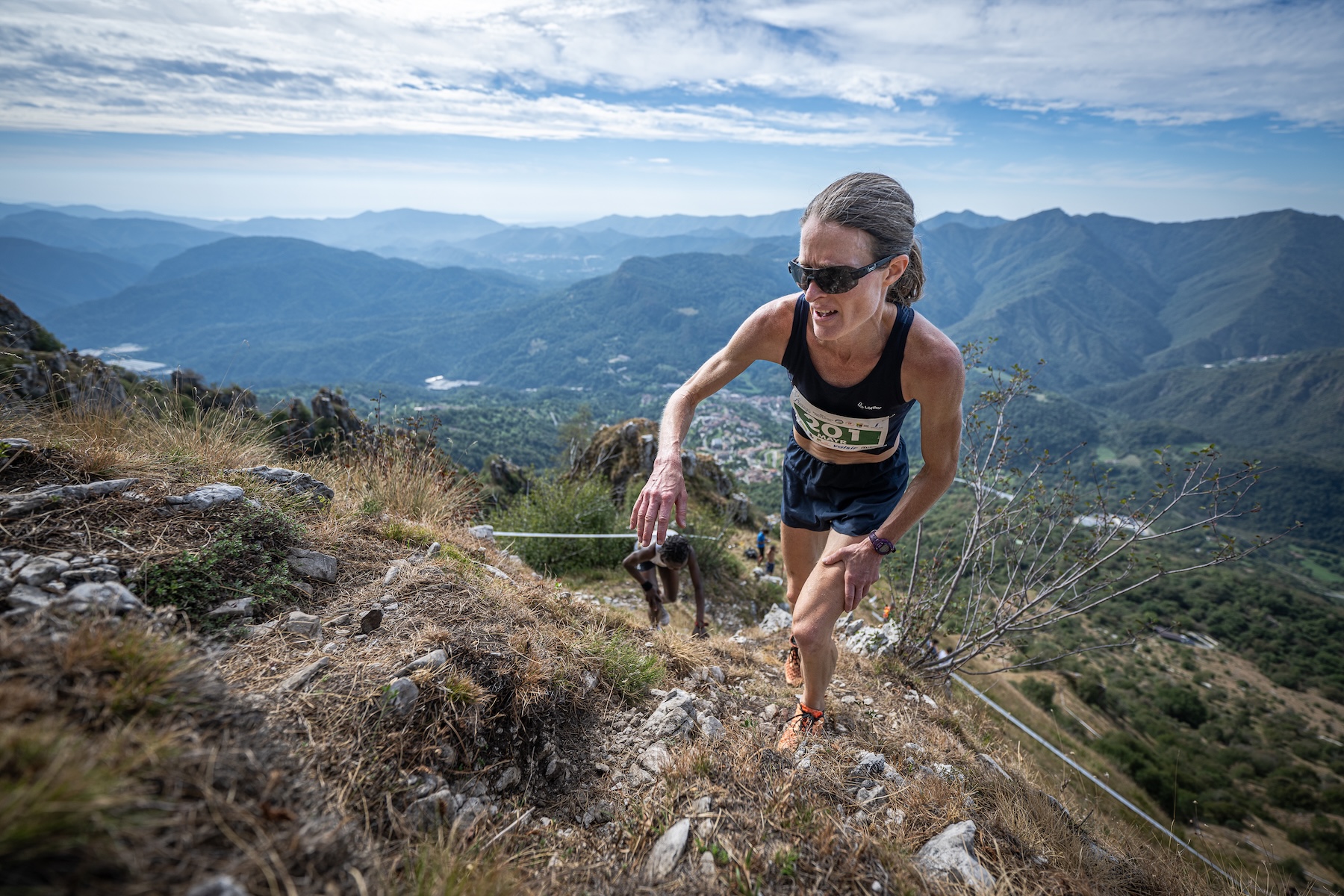
Vertical Nasego ranks among Italy’s most demanding uphill-only races, and its reputation is well earned. The 4.2km course starts gently enough, but gradient increases sharply in the closing stages – nearly half of the route’s 1,000 metres of elevation gain comes in the final kilometre alone. The terrain grows steep enough that competitors are forced to use their hands for parts of the last section.

Both start lists reflected the strength of this year’s World Cup field. Andrea Mayr of Austria and Kenya’s Patrick Kipngeno, past winners with multiple victories between them, lined up alongside reigning World and European champions such as Nina Engelhard (GER) and Jacob Adkin (GBR). They were joined by several athletes who have emerged as this season’s breakout performers, setting up a genuinely open contest with an incredible depth of fields in both races.

The women’s race

The women have a separate start here, to ensure equal coverage and their own finish line. They set off at 10am, with the men’s race starting 45 minutes later.

Engelhard, as reigning World Champion in the uphill race, was a favourite on paper, but she has been injured this year, and this was her first race back, so we waited to see how her race would unfold. It turned out that she was certainly back to fitness, as she looked strong throughout. She won in 39.29 in a dominant performance. It wasn’t a surprise to see Kirsty Skye Dickson (GBR) leading the chase, just as we’ve seen her really attack so many races this year. She finished second in 40.19.

Seven-time World Champion Mayr, who has won here three times, took a very impressive third in 40.59, proving that she is still able to compete at the very highest level against runners who are 20 years younger than her. Mayr still holds the record here (38.39), which she set in 2019.

Our women’s World Cup leader, Ruth Mwihaki Gitonga (KEN) was hot on Mayr’s heels, just eight seconds behind in fourth. 20 year-old rising star Miriam Chepkirui (Ken) added another strong result to her impressive 2026 World Cup competition by taking fifth, maintaining a 30 second gap from Christel Dewalle (FRA).

The men’s race

The men’s race was similarly set up for a fascinating battle. As it played out the main duel was between three-time previous winner, Kipngeno, and last year’s winner – and record holder – Richard Omaya Atuya (KEN). Kipngeno came out on top this time, winning in 33.31, his fastest ever time here and just eight seconds off Atuya’s record. Atuya took second in 34.11.

The battle for third was between two Italian legends of uphill races – Andrea Elia and Henri Aymonod. Elia took third here for the second year in a row, finishing in a time of 34.40, with Aymonod just 20 seconds behind him.

Elijah Karuiki (KEN) beat fellow Run2Gether On Trail runner, Philemon Kiriago, to take fifth, adding another strong result to his World Cup campaign, and 21 year-old Edward Hobbs (GBR) beat some big names to take seventh in his first World Cup race.

Full results can be found here. 

Continue reading

Runners at Vertical Nasego

WORLD CUP RETURNS TO VERTICAL AND TROFEO NASEGO FOR PIVOTAL DOUBLE HEADER

WORLD CUP RETURNS TO VERTICAL AND TROFEO NASEGO FOR PIVOTAL DOUBLE HEADER

Runners at Vertical Nasego

After the drama of Sierre-Zinal, the Mountain Running World Cup returns this weekend with a different kind of test. Vertical Nasego and Trofeo Nasego bring a double-header to northern Italy, drawing many of this season’s leading contenders alongside some of the sport’s most decorated names – and a seven-nation team competition that adds a further edge to proceedings.

From community race to world renowned event

Trofeo Nasego’s rise has been quietly remarkable. What began in 2002 as a local fixture within a circuit of community races in the Brescia valleys – a run up to the Rifugio Nasego mountain hut – has grown into one of the most respected weekends on the mountain running calendar, pulling in top runners from across the globe.

The turning point came in 2015, when the course was redesigned into a 21km route starting in Casto, climbing to Rifugio Nasego, and finishing in the alpine village of Famea. The new layout gave the race a bit of everything: fast running early on, a long, punishing climb, technical terrain underfoot, and a sweeping descent to the finish – the kind of course that rewards all-round ability.

Its status was cemented a year later, in 2016, when Nasego hosted the Italian Championships and added a Vertical Kilometre race to the weekend. Vertical Nasego has since become a fixture on the WMRA World Cup circuit, growing more competitive and more international each year while holding on to its local character.

The roll call of past winners reflects that stature. Trofeo Nasego’s champions include Andrew Douglas (GBR), Sylvain Cachard (FRA), Alice Gaggi (ITA) and Joyce Njeru (KEN), alongside world champions such as Grayson Murphy (USA), Patrick Kipngeno (KEN) and Philemon Kiriago (KEN). Then there’s Andrea Mayr(AUT) – a seven-time world champion who has won Trofeo Nasego and added five Vertical Nasego titles to her collection. Kipngeno, meanwhile, has three victories at the vertical race to his name.

Andrea Mayr

Kenyan dominance, and a field ready to challenge

In the last two years, Kenyan runners have owned the Trofeo Nasego podiums. On the men’s side, Philemon Kiriago, Paul Machoka, Michael Selelo Saoli and Patrick Kipngeno have filled the top three places between them. In the women’s race, Philaries Jeruto Kisang and Joyce Muthoni Njeru were separated only by Scout Adkin (GBR) in 2025, with Susanna Saapunki (FIN) in third in 2024. Kisang completed the vertical-and-classic double in 2025, just as Kipngeno had done the year before.

That Kenyan presence looks just as strong this time around. Ruth Mwihaki Gitonga and Richard Omaya Atuya, the leading names in this year’s World Cup standings, will contest both races, as will last year’s men’s champion, Kiriago. Muthoni Njeru – a perennial contender enjoying another remarkably consistent World Cup campaign – lines up alongside Gloria Chebet and Miriam Chepkirui in a strong women’s contingent. For the men Saoli, Machoka and Kipngeno all return, joined by Ephantus Mwangi Njeri, winner of the Vauban Mountain Trail, and Elijah Karuiki, who has collected three third-place finishes on the World Cup circuit this year.

But the depth in these fields runs far beyond Kenya, and plenty of runners will be lining up with genuine hopes of disrupting the favourites.

The men’s race

Jacob Adkin (GBR) arrives in form, having taken fourth at Sierre-Zinal and won the European Championships Uphill race. Brayan Rodriguez Flores (MEX) has been one of the breakout stories of this year’s World Cup, with top-10 finishes at Broken Arrow, Vauban and Sierre-Zinal. Martin Nilsson (SWE) could pose a threat over the longer distance, while Andrea Elia (ITA), third here in last year’s uphill race, will be one to watch again.

Andrew Douglas, a past winner at Nasego, returns on the back of a strong season that has included podiums in Portugal and China. French runners Theodore Klein and Alric Petit have also impressed wherever they’ve raced this year. On home soil, Italian favourites Andrea Rostan and Henri Aymonod remain athletes to watch, particularly in the vertical race, while British duo Matthew Knowles and Oscar Subuh-Symons – third at São Brás Cross – could also feature.

The women’s race

The sharpest challenge in the women’s race may come from the British runners. Kirsty Skye Dickson is having an outstanding 2026, with two podiums at Transvulcania and one at Vauban, plus a gutsy performance at Sierre-Zinal where she led in the early stages. Elle Twentyman has also shown strong form at São Brás Cross and Vauban, while Ellen Crombie has posted two fifth-place finishes at Grossglockner and Vauban. Eden O’Dea rounds out a strong British group after a string of solid results this season.

As with the men’s race, though, Italy brings real depth on home ground. Benedetta Broggi has been quietly excellent all year, finishing top 10 in every World Cup race she’s entered. Francesca Ghelfi has an outstanding history at this event, with podium finishes at both Trofeo and Vertical Nasego. Martina Falchetticould make her mark in the uphill race, and Arianna Dentis in the longer one.

Elsewhere, Christel Dewalle (FRA) will be worth watching, especially uphill, while Courtney Coppinger(USA) is also expected to feature. And then there’s Andrea Mayr (AUT) – never a runner to count out at Nasego, whatever the distance.

How to follow the action

Vertical Nasego is on Saturday 5th September, women set off at 10am and the men at 10.45am.

Trofeo Nasego is on Sunday 6th September, with a mass start at 9.30am.

Follow WMRA social media channels to keep up-to-date with the action.

Continue reading

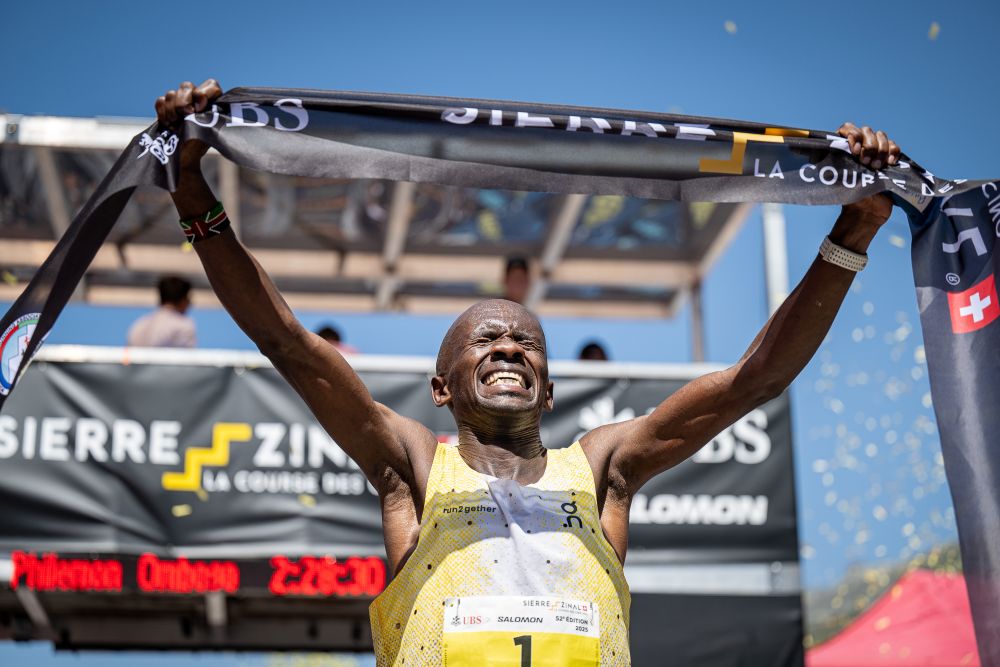
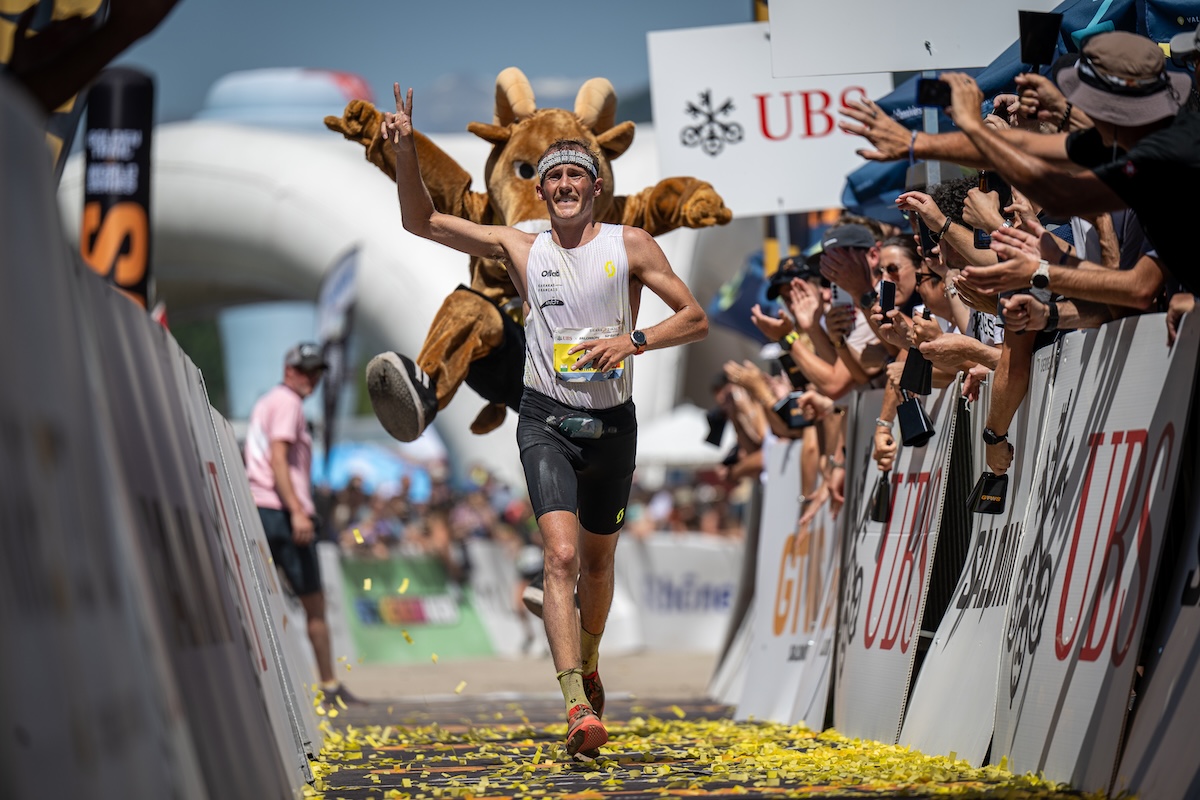
FLOREA ENDS LONG WAIT FOR SIERRE-ZINAL VICTORY AS KIRIAGO SEALS THIRD WIN

FLOREA ENDS LONG WAIT FOR SIERRE-ZINAL VICTORY AS KIRIAGO SEALS THIRD WIN

For more than half a century, runners from around the world have travelled to Sierre, Switzerland, to take on the 31-kilometre journey to Zinal, beneath the backdrop of the Alps’ 4,000-metre peaks. Now in its 53rd edition, Sierre-Zinal once again brought together the world’s best mountain runners, all chasing one of the most coveted titles in the sport, and it delivered one of the most interesting races we have seen in several years.

With former winners such as Philemon Ombogo Kiriago, Caroline Jepkoech Kimutai (both KEN), Maude Mathys (SUI) and Sophia Laukli (USA), on the start line, as well as a large number of exciting runners who broke into the top 10 here last year, both the men’s and women’s fields had huge depth and unpredictability. Serving as both a Golden Trails and WMRA World Cup race, the level of competition was incredibly high.

It is a hugely important race for this year’s World Cup, coming at a pivotal time in the competition with many of the main players  in the World Cup taking part.

The nature of the Sierre-Zinal course is that it climbs from 560m in Sierre all the way up to 2424m in Nava over the course of 24km. Then the runners run downhill for 7km to the finish in Zinal at 1675m. This means that there is potential for huge change in the positions on the long downhill and hard-fought uphill leads can be obliterated in the space of a few kilometres.

THE WOMEN’S RACE

The women set off first here to ensure equal visibility and focus on the women’s and men’s races. It also means that the first female and male finishers arrive at roughly the same time.

It was no surprise to see last year’s women’s winner Kimutai striking out in the lead early as the women set off, but from very early on Morven Goodrum (GBR), making her debut at Sierre-Zinal, was right on her shoulder. Kirsty Skye Dickson (GBR), who has had some strong results in this year’s World Cup, Madalina Florea(ROU), third here in 2024, and Nienke Brinkman (NED), who was second on her debut here in 2021, were also just behind.

By the 5km point it was Brits Goodrum and Skye Dickson who were leading together, with Florea just behind, with Kimutai and Brinkman completing the leading group. The next group, two minutes behind, consisted of Olympic marathon runner Laura Hottenrott (GER), Oria Liaci (SUI), who finished fourth here last year, and Jessica Paguay (ECU). By the Ponchette aid station the groups remained roughly the same with women’s World Cup leader Ruth Gitonga (KEN), Miriam Chepkirui (KEN), Anna Gibson (USA) and Vivien Bonzi(ITA) also with that chasing pack.

As the climb continued, the top three of Goodrum, Florea and Brinkman seemed to continually change, with rarely more than 20 seconds between them. Skye Dickson had dropped back a little, with Kimutai her main challenger. The chasing group continued to push, with Liaci closing and Gibson slowly moving up, but it was starting to look like the gap to the top five might be too big to close unless something dramatic happened on the downhill.

Once they hit the descent Florea made her move and began to pull away from Goodrum, but the gap remained close at 30 – 40 seconds. At Barneuza (26km) Brinkman was over two minutes behind them, with Liaci 30 seconds further back and Kimutai just behind her. But Kumutai closed the gap and then overtook both Liaci and Brinkman to move into third place. In typical Sierre-Zinal style it was all going to come down to the final, steeper descent and the fast and furious finish on the road.

Florea held on for a brilliant first victory here and Kimutai overtook Goodrum to take second, with Goodrum finishing an extremely impressive third on her debut here. Liaci took fourth again, with Brinkman just 17 seconds behind her.

Women’s top 5

  1. Madalina Florea (ROU/SCOTT) – 2.55.44
  2. Caroline Kimutai (KEN/Salomon) – 2.56.30
  3. Morven Goodrum (GBR/Windsor Slough Eton and Hounslow) – 2.57.12
  4. Oria Liaci (SUI/Brooks) – 2.58.36
  5. Nienke Brinkman (NED/Nike ACG) – 2.58.53

THE MEN’S RACE

There were some very strong favourites in the men’s race, with former winner Kiriago, runner-up Patrick Kipngeno (KEN) and Elhousine Elazzaoui (MAR), who has won most other big races but never this one. But nothing is a foregone conclusion at Sierre-Zinal.

The men’s race started with Kipngeno and Kiriago setting the pace but Jacob Adkin (GBR), the uphill champion at this year’s European Off-Road Running Championships was in the leading group too. Just behind them sat Julius Ott (GER), Richard Omaya Atuya (KEN), Rodríguez Flores Brayan (MEX), Anthony Felber (FRA), Christian Allen (USA), and, in these early stages, Elazzaoui.

On the long kilometres of climbing, it was Adkin who set the pace, leading through both Ponchette and Chandolin aid stations. Kipngeno remained in close contact, just a few seconds behind, together with Kiriago and Atuya. Allen, Kevin Kibett (KEN), Flores, Elazzaoui and Michael Selelo Saoli (KEN) a minute behind.

Kipngeno and Kiriago decided to attack Adkin while still on the uphill section, and by the time they reached Hotel Weisshorn (20km) they were neck-and-neck, with Atuya now in third, with the three Run2gether team mates working together, and Adkin just behind. The chasing group remained roughly the same, with Allen, Kibett and Flores leading the chase, but now with the addition of Paul Machoka (KEN). It was all going to come down to those downhill kilometres.

Kiriago seemed unable to shake off Kipngeno, with the lead changing hands multiple times and just seconds in it. We were in for a classic Sierre-Zinal sprint finish. Behind them Saoli had stealthily moved through into third but Adkin remained with him, Atuya was fading and it looked like Kibett or Allen may catch them.

Eventually Kiriago managed to pull away from Kipngeno, winning by 32 seconds, his third victory here. There was a gap of three minutes back to Saoli in third, making it a full men’s podium for Kenya and Run2gether On Trail, Adkin hung on for a gritty and impressive fourth and Kibett won the battle for fifth with Allen.

Men’s Top 5

  1. Philemon Ombogo Kiriago (KEN/Run2gether On Trail) – 2.26.24
  2. Patrick Kipngeno (KEN/Run2gether On Trail) – 2.26.56
  3. Michael Selelo Saoli (KEN/Run2gether On Trail) – 2.29.36
  4. Jacob Adkin (GBR/New Balance) – 2.30.49
  5. Kevin Kibett (KEN/Salomon) – 2.30.58

Continue reading

SIERRE-ZINAL 2026: THE WORLD’S BEST PREPARE FOR THE RACE OF FIVE 4,000S

Sierre-Zinal 2026: The World’s Best Prepare for the Race of Five 4,000s

This weekend the 2026 Mountain Running World Cup rolls into Switzerland for one of the highlights of the mountain running calendar – Sierre -Zinal. First held in 1974, Sierre-Zinal is recognised as the oldest race of its kind in Europe.

Sierre-Zinal is the World Cup’s next long mountain race and it is stage 11 of this year’s competition. Known as ‘la course des cinq 4,000s’ or ‘the race of the five 4,000-metre peaks’, its iconic 31-kilometre course climbs 2,200 metres from Sierre before descending 1,100 metres into Zinal. 

Sierre-Zinal has been part of the WMRA World Cup since 2018, and since then has provided the backdrop for some of the most competitive World Cup stages ever witnessed. Now celebrating its 53rd edition, the legendary Swiss race remains unique as the only mountain-running event in Europe bringing together two of the sport’s biggest international circuits: the WMRA World Cup and the Golden Trail World Series.

The current records belong to Kilian Jornet (ESP), who ran 2:25:34 in 2024, and Maude Mathys (SUI), who recorded 2:49:20 in 2019. Prior to Jornet finally beating the men’s record in 2024, it was held by Jonathan Wyatt (NZL) for 16 years. Wyatt is now WMRA World Cup Manager, strengthening the link between the WMRA and Sierre-Zinal still further.

ANTI-DOPING EDUCATION INITIATIVE

This year’s event will also mark an important step in the WMRA’s commitment to clean sport. Together with the Athletics Integrity Unit (AIU), the WMRA has invested in a new anti-doping education initiative created specifically for the mountain and trail-running community.

Following the first online session held in April, the initiative’s first on-site education sessions will take place during the Sierre-Zinal weekend, giving athletes, coaches and managers direct access to practical guidance on anti-doping regulations, testing procedures, and their rights and responsibilities.

ELITE FIELDS

Sierre-Zinal always attracts top elite fields, but it also throws up some wild cards in the form of crossover stars from other sports like triathlon, road running and skiing. This year is no exception.  

Last year’s winners, Philemon Ombogo Kiriago and Caroline Jepkoech Kimutai (both KEN), return to defend their titles. Kiriago has been dominant as ever in this year’s World Cup and is currently lying in second place in the men’s competition with two wins in the long distance races (at Broken Arrow and Transvulcania). After Kimutai burst onto the scene at last year’s Sierre-Zinal we haven’t seen her in the World Cup but she won Ledro Sky Trentino at the end of May. It will be exciting to watch her in action again here.  

Four-time winner Maude Mathys (SUI) will be back again to try to better her third place from last year. Will her record remain for another year? Ruth Gitonga (KEN) is leading our women’s World Cup competition and is in dominant form this year with six podiums from six races, including wins at Grossglockner, Vauban and Transvulcania. It will be interesting to see how her debut at Sierre-Zinal unfolds. The 2023 women’s winner, Sophia Laukli (USA), will also be back and Nienke Brinkman (NED), second on her memorable debut here in 2021, continues her return from injury. 

The women’s competition is sure to be fierce, with huge depth in the form of Oria Liaci (SUI), fourth here last year, Madalina Florea (ROU), third in 2024 and having another strong season this year, German Olympic marathoner Laura Hottenrott, fifth last year, Miao Yao (CHN), who was sixth last year and fourth in 2023 and Anna Gibson (USA), who has finished eighth and sixth here and won the recent Broken Arrow Ascent. In addition we will see Kirsty Skye Dickson (BGR), who is having a great 2026 World Cup, making her debut here, and Camilla Magliano (ITA), currently just behind Dickson in this year’s World Cup rankings, who has had three strong results here, will also run.

The men’s competition looks equally exciting. The top five contenders in this year’s men’s World Cup will be on the start line – Kiriago, Richard Omaya Atuya (KEN), Ephantus Mwangi Njeri (KEN), Rodríguez Flores Brayan (MEX) and Paul Machoka (KEN). Between them they have dominated the podiums at this year’s events so far.

But they will face a depth of competition they haven’t experienced yet this year. Elhousine Elazzaoui (MAR), who has won most races but never Sierre-Zinal (though he came so close in 2024) will no doubt redouble his efforts to finally take the title. He will once again be one of the men’s favourites. Like Elazzaoui, Patrick Kipngeno (KEN) has never won here, despite three second places. In addition Andreu Blanes (ESP), 2022 winner and eighth last year, returns this year, alongside Martin Nilsson (SWE), and Olympic triathlete Adrien Brifford (SUI), who were sixth and fourth respectively on their impressive debuts last year. 

As ever the only certainty at Sierre-Zinal is that there will be a few surprises. Six-time top ten finisher Robbie Simpson (GBR) can never be discounted here. Jessie Diggins (USA), Olympic gold medallist in cross country skiing, makes her debut here and could be one to watch.

Weekend schedule

Saturday 8th August

10.30am elite women’s start

11am elite men’s start

Follow all the action on the WMRA social media channels and via local broadcasters.

Continue reading

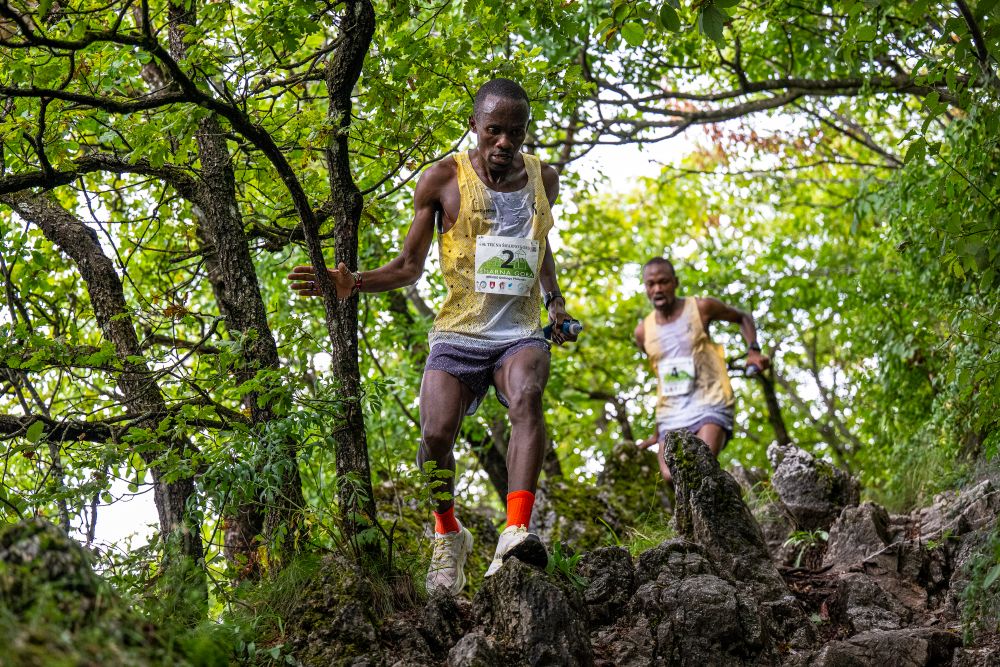
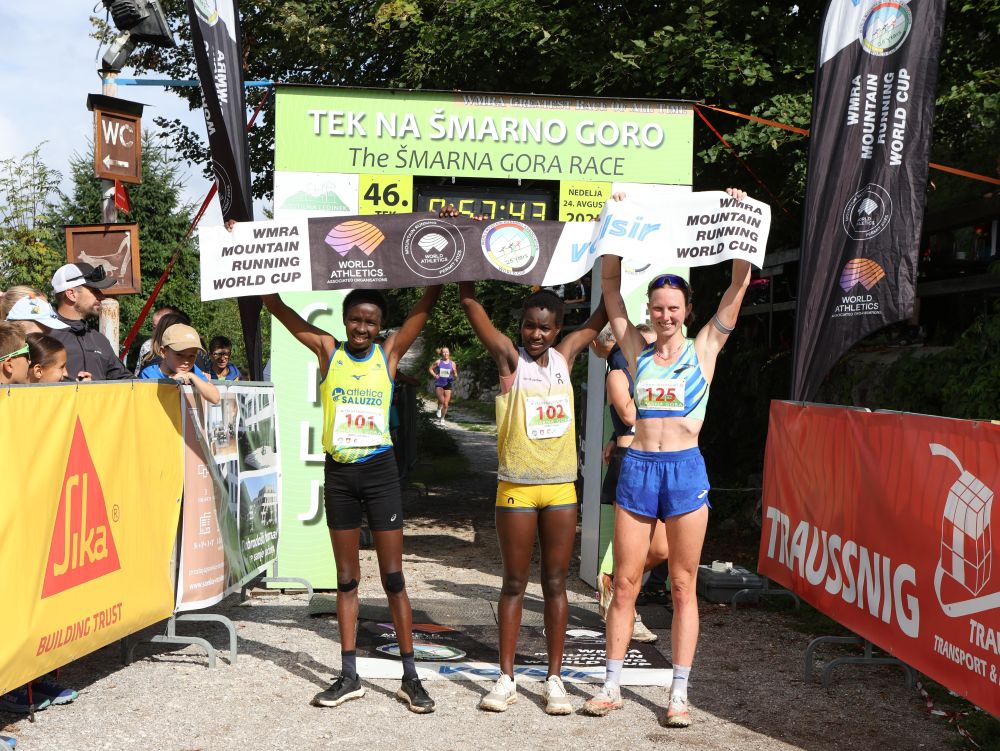
KIRIAGO CRUSHES RECORD TO WIN MEN’S WORLD CUP AND CHEBET CLINCHES WOMEN’S RACE AT SMARNA GORA

KIRIAGO CRUSHES RECORD TO WIN MEN’S WORLD CUP AND CHEBET CLINCHES WOMEN’S RACE AT SMARNA GORA

It’s hard to imagine a more fitting race to conclude the World Cup than Smarna Gora. The final stage, a classic up and downhill race, of this year’s competition took place on a course with a deep history of mountain running where we’ve seen many epic duels in the World Cup over the years. And with everything to play for in the World Cup competition, we knew we were going to see some intense racing!

From its finish by a church dating back to the early 1700s to the views of the Kamnik and Julian Alps and a local community who really embrace this race and its runners, it’s a unique race experience from the top elite to the back of the mass field. Starting in Rocen and then ascending 705m and descending 350m over the course of 10k, this is a course with some fast terrain but also with some deceptively technical parts.

With his third place in yesterday’s Velika Planina Philemon Ombogo Kiriago (Run2gether) pulled ahead of Paul Machoka (Run2gether) to take the lead in the men’s World Cup by just 10 points, setting up an enticing men’s competition today. With a DNF yesterday Valentine Jepkoech Rutto (Atletica Saluzzo) could no longer catch Scout Adkin, who wasn’t able to run here due to injury but will win the women’s World Cup. But there was still a huge amount of potential for shaking up the rest of the women’s competition.

THE WOMEN’S RACE

While the 2025 women’s World Cup winner was already decided, there was no let-up in the racing. Important points were up for grabs and we had a fascinating field, ranging from Andrea Mayr, record holder here, who has recorded six of the eight fastest women’s times, to exciting younger athletes like Nelie Clement (Gap Hautes Alpes Athletisme) and Courtney Coppinger (Brooks), racing here for the first time.

After yesterday’s DNF it was uncertain how Rutto would do here at Smarna Gora, but normal service was resumed as she and Glora Chebet (Run2gether) led it out for the women. Along with them were Coppinger and, a few seconds back, Mayr, continually pushing each other. Elle Twentyman, another breakout star of this year’s World Cup, and Clement were 30 seconds back and not letting them get away.

After 6km Chebet was still leading, but Rutto was still holding on to her and the gap remained at around 20 seconds. By this point Coppinger and Rutto were running neck-and-neck and they had opened more of a gap on Mayr. But you can never discount Mayr, whose consistency over the last 20 years has been nothing short of astounding.

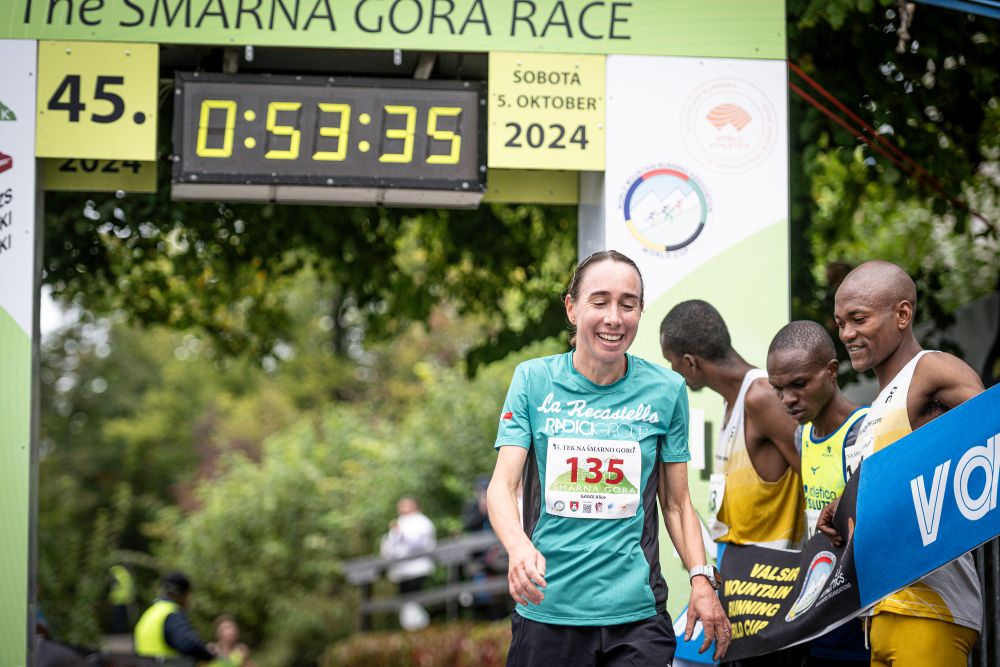
Eventually Chebet could not be caught and she stretched out her lead in the final kilometres, taking the win in 49.55. Rutto held off Coppinger, taking second in 51.02, with Coppinger 7 seconds behind. Mayr never stopped pushing and took fourth.

Women’s top 5

  1. Gloria Chebet (Kenya) – 49.55
  2. Valentine Rutto (Kenya) – 51.02
  3. Courtney Coppinger (USA) – 51.09
  4. Andrea Mayr (Austria) – 51.49
  5. Elle Twentyman (Great Britain) – 52.00

THE MEN’S RACE

 It was no surprise to see a trio of Run2gether athletes taking it out from the start. Josphat Kiprotich initially took command, with Kiriago and Richard Omaya Atuya, yesterday’s men’s winner, right on his heels. They opened a gap of 30 seconds to Machoka, who was desperate to secure those all-important points he needed to take the men’s World Cup. 10 seconds further back Michael Selelo Saoli (Run2gether) and Mwangi Ephantus Njeri (Run2gether) were also in the mix, with Lorenzo Cagnati (La Sportiva) also keeping pace.

Kiprotich kept the lead but never succeeded in shaking Kiriago, who looked ominously comfortable despite the relentless pace. Atuya also looked focussed and was holding off Machoka, though never really extending the gap and now Saoli was starting to challenge. And the splits were indicating that the course record may well go!

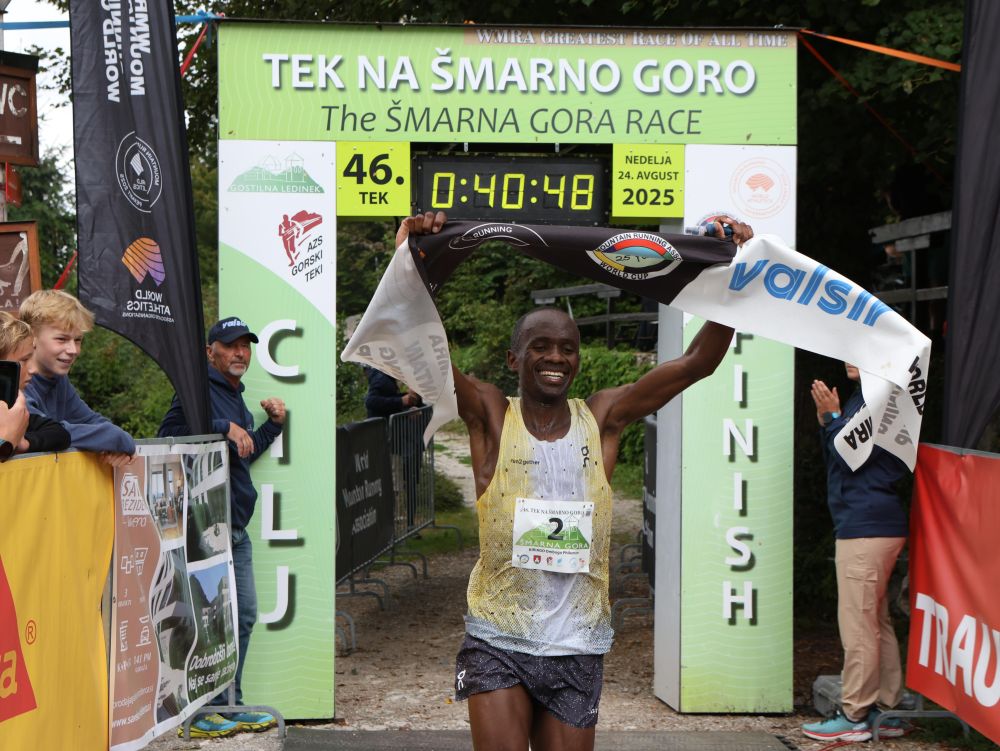
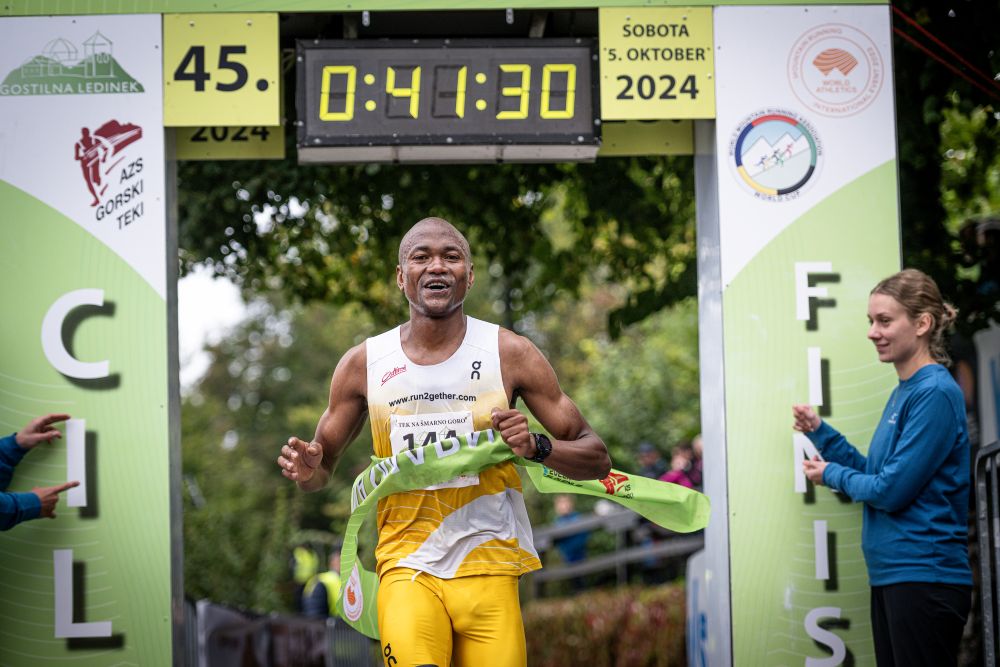
Kiriago finally made his move, overtaking teammate Kiprotich, and attempting to put some daylight between them. He could not be caught and he took the win, knocking a big chunk off the course record, lowering it to 40.47 (from 41.30, set by Atuya just last year). Kiprotich held on to take second in 40.55 and Atuya took third in 41.07. All three were under the course record, showing what a fierce competition it was.

Men’s top 5

  1. Philemon Ombogo Kiriago (Kenya) – 40.47
  2. Josphat Kiprotich (Kenya) – 40.55
  3. Richard Omaya Atuya (Kenya) – 41.07
  4. Paul Machoka (Kenya) – 41.59
  5. Michael Selelo Saoli (Kenya) – 42.12

WORLD CUP FINAL STANDINGS

In the women’s World Cup Scout Adkin executed a pretty perfect season, taking part in nine events, winning three, coming second in five and fifth in one. Adkin takes the women’s World Cup for the second year in a row. Valentine Jepkoech Rutto takes second place overall and Gloria Chebet’s win today means that she overtakes Joyce Muthoni Njeru to take third overall.

The men’s World Cup was all change on finals weekend. Coming into the weekend Paul Machoka led, with Kiriago trailing by 25 points. But that flipped following Velika Planina and Kiriago took the lead by just ten points. Kiriago’s win today secured the men’s World Cup title, with Machoka having to settle for the runner-up position. Saoli finished in third place in the men’s competition, holding off Atuya by just three points.

Continue reading

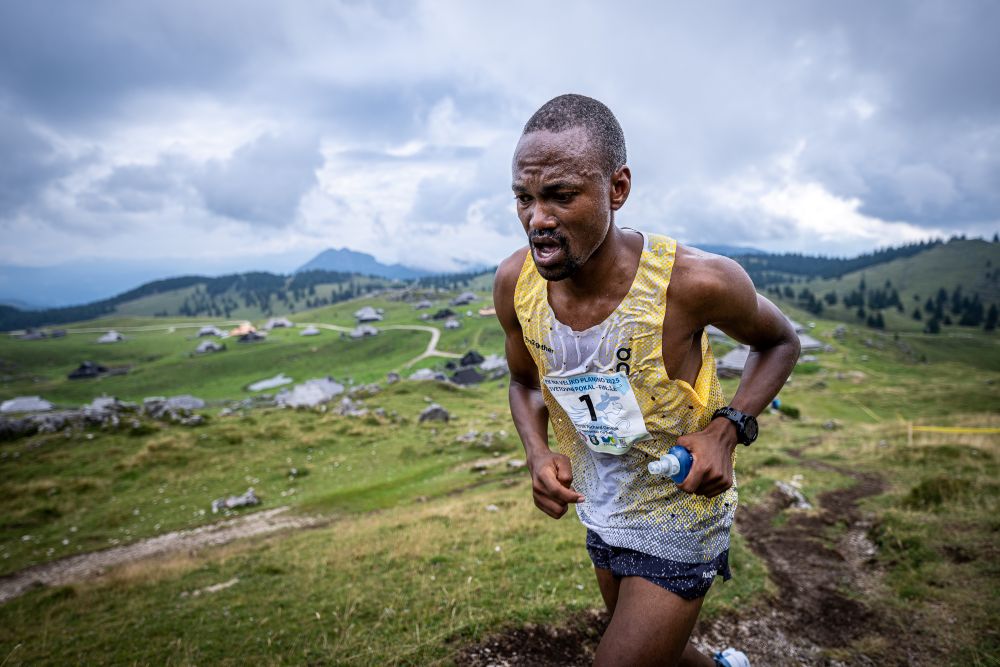
SAAPUNKI STORMS TO COMMANDING WIN AND ATUYA TAKES MEN’S CROWN AT VELIKA PLANINA

SAAPUNKI STORMS TO COMMANDING WIN AND ATUYA TAKES MEN’S CROWN AT VELIKA PLANINA

The final of the 2025 World Cup began in spectacular style today with a dramatic competition at Velika Planina. A host of top international athletes congregated in this stunning area of Slovenia to take on this historic course.

Not only has Velika Planina been used as the venue for the 2010 World Mountain Running Championships and the 2017 European Off-Road Championships, but it will also be the course used in the European Off-Road Running Championships in June 2026. And with the World Mountain and Trail Running Championships in Canfranc just a month away, the World Cup finals were perfectly timed to provide a highly competitive opportunity for the athletes to test their fitness and racing strategies.

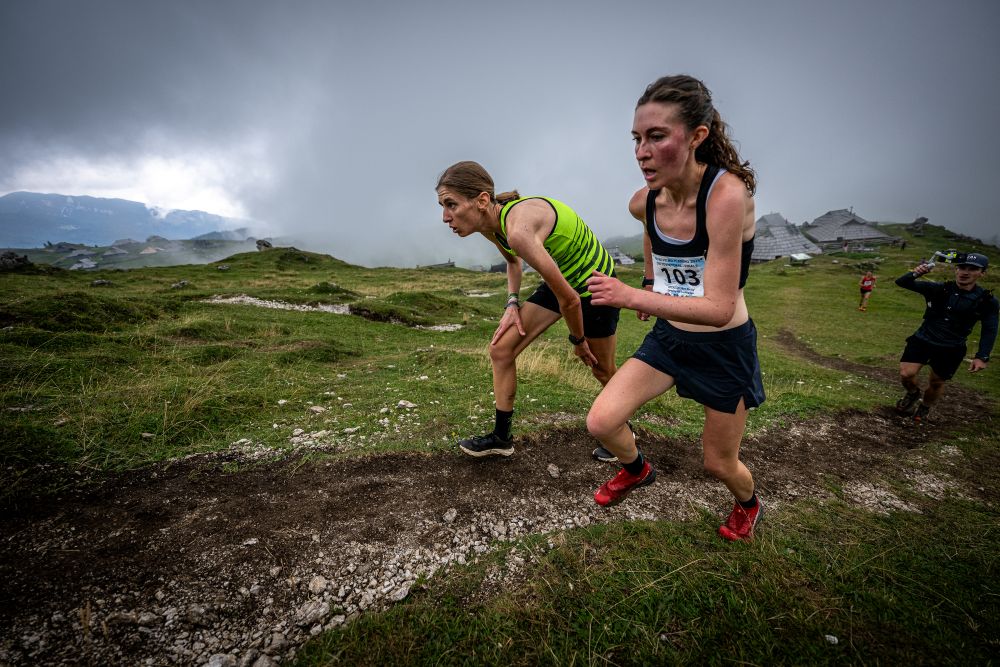
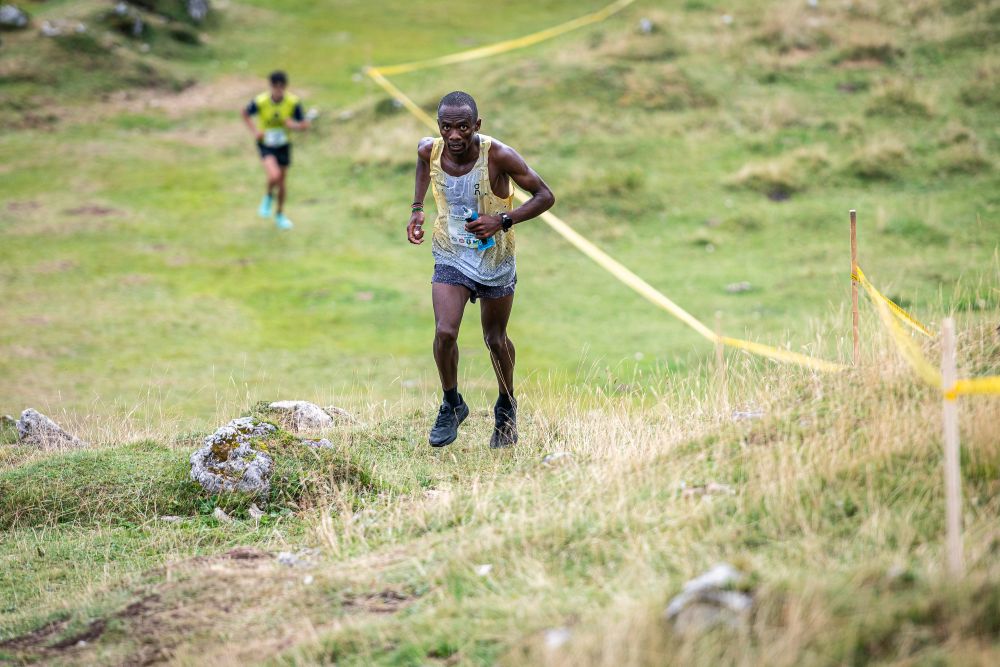
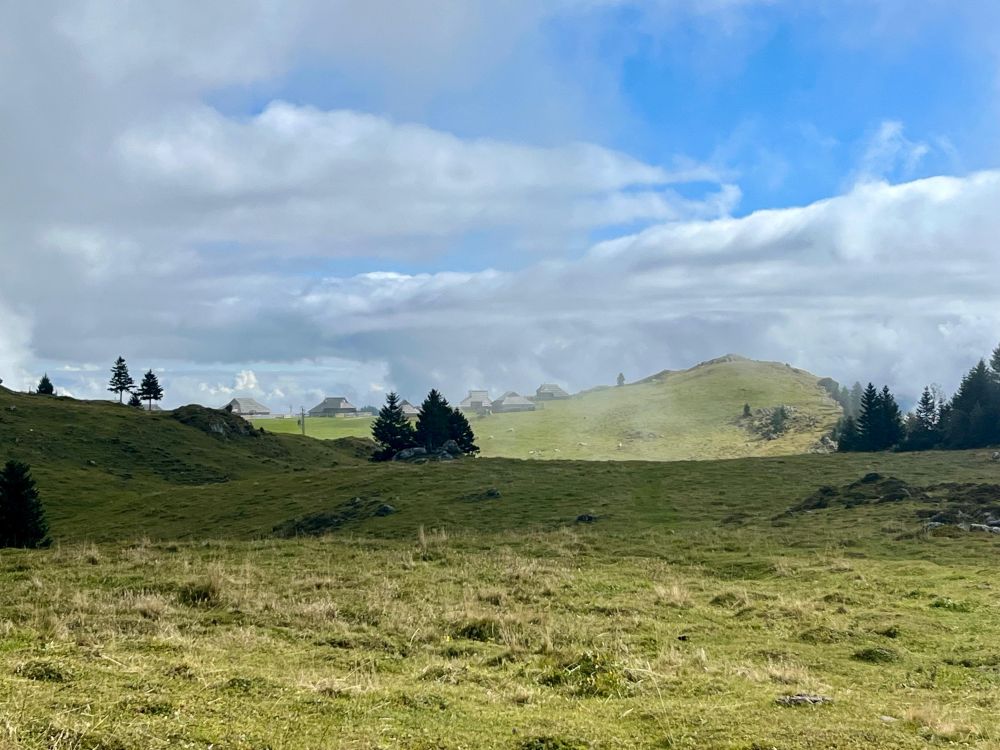
Velika Planina was the World Cup’s final classic uphill race and the course climbed 1280m over 8.5km, starting at Stahovica and finishing at Gradišče. With a mix of steep forest trails, open meadows offering some easier running, and a final kick up to the finish line, this route had a bit of everything for the runners. The unique finish line was amongst the shepherds’ villages that the area is famous for, with oval huts with spruce shingles. The misty conditions at the summit just added to the special atmosphere at the summit.

THE WOMEN’S RACE

With the unfortunate withdrawal of women’s World Cup leader, Scout Adkin, the women’s race was wide open. With a field including established World Cup superstars like Andrea Mayr (Hoolirun), Gloria Chebet (Run2Gether) and Valentine Jepkoech Rutto (Atletica Saluzzo), as well as breakout performers from this year like Nelie Clement (Gap Hautes Alpes Athletisme) and Elle Twentyman (England Athletics), plus a number of young American athletes we were seeing for the first time, it was a fascinating women’s start line.

But there was one athlete determined to take it out right from the start and that was Susanna Saapunki (On Running). We have seen some incredible performances from Saapunki since she made the switch from cross-country skiing to mountain running, so we knew her early breakaway was ominous for the other runners.

By the first timing point Saapunki had opened up an impressive lead of a minute over the chasing pack of Mayr, Kirsty Dickson (Carnethy Hill Running Club) and Italian Benedetta Broggi (Sport Project VCO). Twentyman was right on their heels, with Martina Falchetti (Sport Club Merano) and Clement 20 seconds further back.

Saapunki managed to maintain and even extend her lead through the next section, despite a knee injury hampering her on the downhills. By this point Dickson and Mayr had opened up a lead of over a minute and a half on Falchetti and Clement, with Lucia Arnoldo (Atletica Domomiti Belluno) and local favourite Lucija Krkoc (ŠD Nanos) now joining the chase.

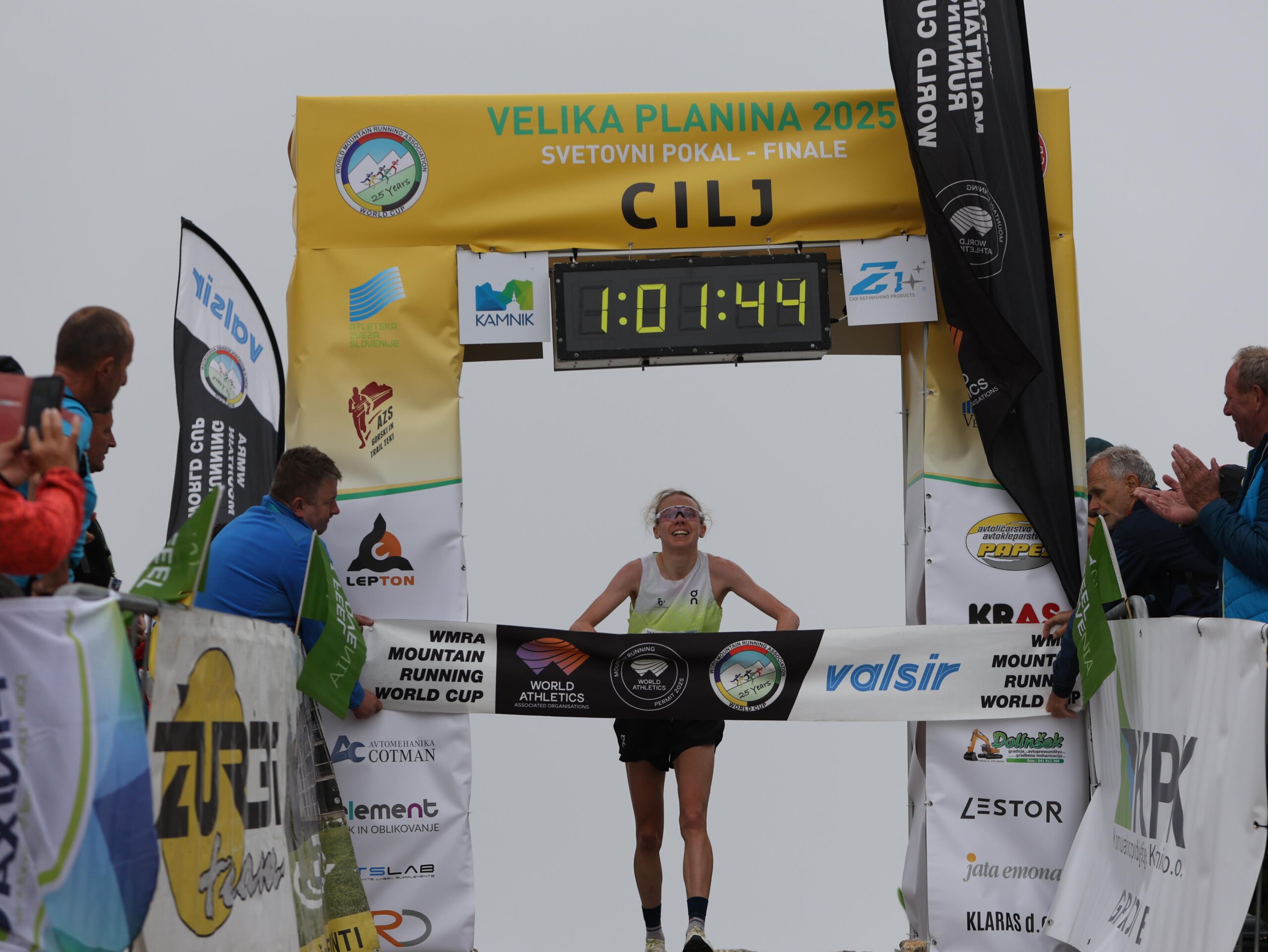
Eventually Saapunki could not be caught and took an emphatic victory in 1.01.43. With just 1km to go there were three women – Broggi, Dickson and Mayr – all together and desperately trying to put some distance between each other. Broggi eventually won a very close duel with Dickson and took second place in 1.04.32, with Dickson just one second behind in third. Mayr took fourth place and Chebet came through for a very creditable fifth.

Top 5 women

  1. Susanna Saapunki (Finland) – 1.01.43
  2. Benedetta Broggi (Italy) – 1.04.32
  3. Kirsty Dickson (Great Britain) – 1.04.33
  4. Andrea Mayr (Austria) – 1.05.03
  5. Gloria Chebet (Kenya) – 1.05.13

THE MEN’S RACE

As with the women’s race, the men’s field was incredibly strong. Seven of the top ten men in the World Cup standings were on the start line, including Paul Machoka (Atletica Saluzzo), Philemon Ombogo Kiriago, Michael Selelo Saoli and Richard Omaya Atuya (all Run2Gether), who we’ve seen dominate so many races this year. Add in top Italians Andrea Rostan (La Sportiva/Atletica Saluzzo) and Andrea Elia (Topo Athletics), (Henri Aymonod unfortunately had to withdraw due to injury), another top Kenyan in Josphat Kiprotich (Run2Gether) and revered local runners like Luka Kovačič and Klemen Španring and we really had a race on our hands.

Where the women’s race had a definitive leader from the off, it was more tentative in the men’s race. Initially a small group formed and it took a while for anybody to break away from it. When they did it was Kiprotich who made the move. But Atuya stuck to him and it didn’t seem that Kiprotich was able to put much distance between them. Just behind lay Kiriago and then Machoka and Elia were neck-and-neck through the first timing point. Rostan was also a few seconds behind, with Abraham Ekwan (Pega Kenya).

Atuya made his move after the steep forest section and he reached the next timing point in the lead. He had now put 20 seconds between him and Kiprotich, but it was still a narrow margin. Kiriago and Elia were now together and had broken away from the rest of the pack, a minute and a half behind Atuya and 45 seconds ahead of Machoka and Španring, who was by now exercising his local advantage. It was all still extremely close and would come down to the flatter final section before the uphill finish.

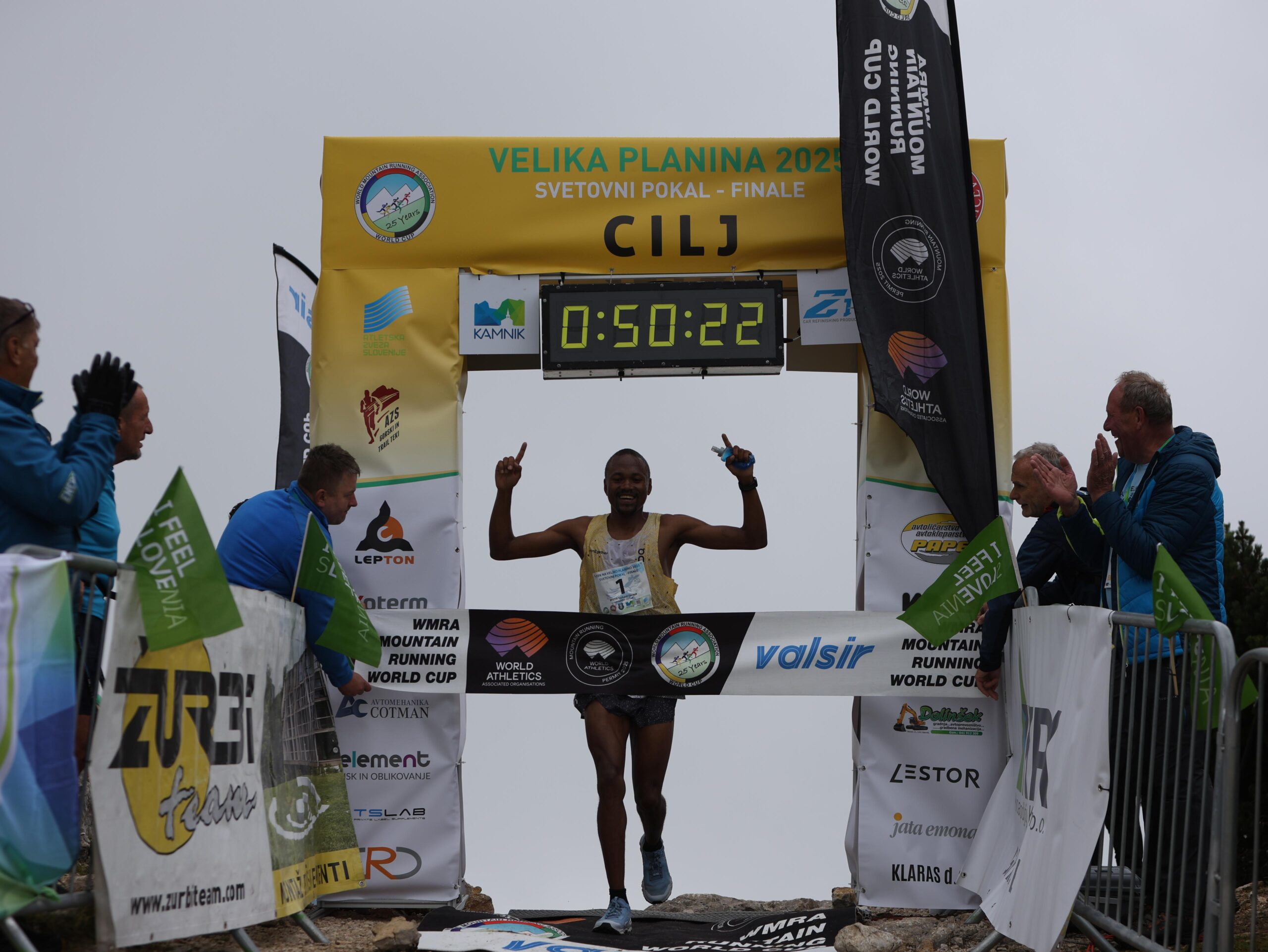
Atuya had run a very smart race and he had plenty in the tank to extend his lead on the faster section. He took the win in 50.21, with Kiprotich holding on to second in 51.14. Kiriago won the battle against Elia to claim third in 52.18.

Top 5 men

  1. Richard Omaya Atuya (Kenya) – 50.21
  2. Josphat Kiprotich (Kenya) – 51.14
  3. Philemon Ombogo Kiriago (Kenya) – 52.18
  4. Andrea Elia (Italy) – 52.39
  5. Paul Machoka (Kenya) – 53.35

Continue reading

WORLD CUP REACHES THRILLING CLIMAX IN SLOVENIAN DOUBLE-HEADER

WORLD CUP REACHES THRILLING CLIMAX IN SLOVENIAN DOUBLE-HEADER

After 13 gruelling stages across three continents and four months of high-octane competition, the World Cup reaches its dramatic finale this weekend. And where better to crown this year’s champions than the iconic slopes of Smarna Gora – a venue rich in mountain running history and prestige?

Slovenia takes centre stage for this ultimate showdown, hosting a blockbuster of a mountain running weekend that promises edge-of-the-seat racing. The action kicks off at Velika Planina in Kamnik on Saturday, August 23rd, with one last lung-busting classic uphill race. Then, all eyes turn to Smarna Gora on Sunday for the grand finale – a classic up-and-downhill race to decide the World Cup’s ultimate victors.

Velika Planina follows a course used in the 2010 World Mountain Running Championships and the 2017 European Off-Road Championships. This very route is set to host the European Off-Road Running Championships in June 2026, so it will not only be a testing route for the World Cup competitors, but it will also provide a dress rehearsal for some of the athletes targeting the championship next year. It’s an 8.5km course with 1280m of ascent, starting at Stahovica and finishing at Gradišče.

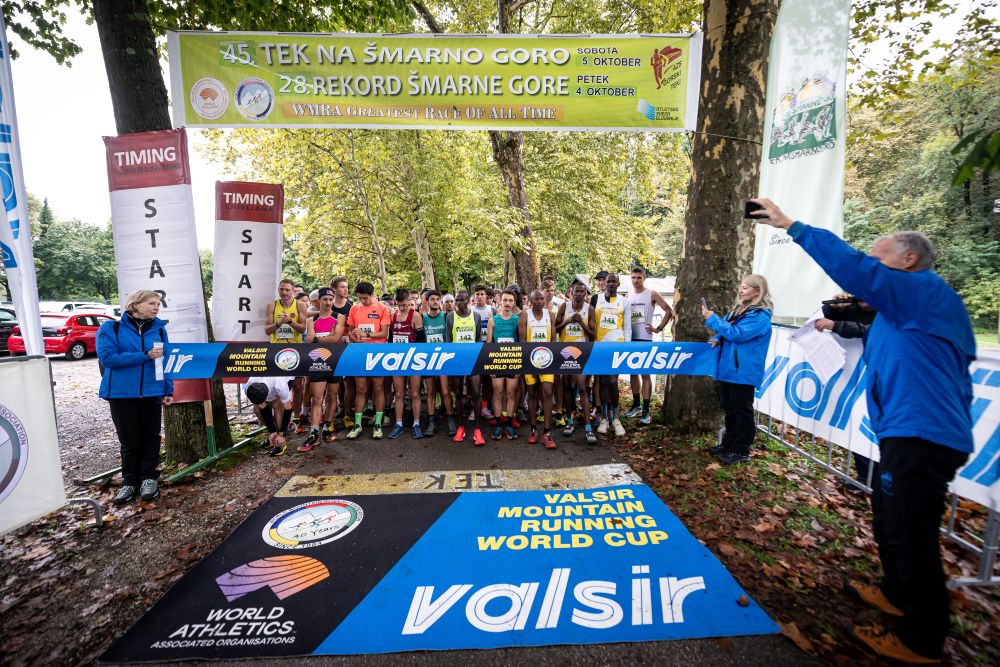
The following day the World Cup heads 20km away to Ljubljana, the scene of many World Cup competitions over the years, and a race with a deep mountain running history. Smarna Gora began in 1979 and it is an absolute ‘must-do’ in the race calendar. In 2020 it was voted the greatest mountain race of all time by the public, in a poll by WMRA. Smarna Gora might not take place in the high mountains, like some of the other World Cup races, but it packs a punch into its 10km with 705m of ascent and 350m of descent.

Both races showcase the best of Slovenian running and culture. Velika Planina is a race of alpine scenery, forests and meadows and it offers panoramic views of the Kamnik-Savinja Alps. It is also home to one of Europe’s few remaining high-mountain shepherd’s villages, with oval huts with spruce shingles. They bring their cattle down to graze on the plateau in what is a centuries-old tradition.

Smarna Gora Race takes place on a famous hill in the area which boasts a Baroque church dating back to 1711. The church bells, a hallmark of Slovenian tradition known as “pritrkovanje,” will ring out on Sunday, welcoming the runners. And as they take on this stunning, and, in places, technical route, they will enjoy views of the Kamnik and Julian Alps. There is a particularly strong community spirit around this event, with a long history of local people maintaining its traditions, while also embracing innovations in the sport.

Top fields are assembled in both the men’s and women’s races. Five out of the top 10 women in the World Cup rankings will be on the start line of both races, and nine out of the top 10 men will be in action over the weekend.

THE WOMEN’S RACE

Scout Adkin (HOKA EU) leads the women’s field at the moment, incredibly finishing either first or second at all but one race she has run in this year’s World Cup. Unfortunately she is not able to race this weekend due to an injury she picked up at the British uphill trial race for next month’s World Championships. Her closest rival, Valentine Jepkoech Rutto (Atletica Saluzzo), will run both races, and she has proven herself to be as adept at different types of race as Adkin, if not quite as consistent.

Gloria Chebet (Run2Gether), another consistent performer, is currently in fifth place in the World Cup standings, but good results here could see her jump up in the absence of Joyce Muthoni Njeru and Philaries Jeruto Kisang. It will be really exciting to see how Nelie Clement (Gap Hautes Alpes Athletisme) fares, after that breakthrough performance at Vauban, where she won the classic up and downhill race and finished third at the classic uphill race. Aged just 22 she has definitely been one of the rising stars of this year’s World Cup.

Andrea Mayr (Hoolirun) has continued to prove that she is still performing at the top level this season and she will no doubt be one of the athletes to set the pace. Elle Twentyman (England Athletics) is currently lying in eighth place in the World Cup standings, just behind Mayr, and will also race both events. Kirsty Dickson (Carnethy Hill Running Club) comes to the race straight off winning the British uphill trial for the World Championships, so could be one to watch, particularly in the classic uphill race.

Susanna Saapunki (On Running) will run Smarna Gora Race, off the back of her recent top 10 finish at Sierre Zinal. She has a strong record at Smarna Gora, having done the double here, winning the Race and the Record in 2023 and finishing fourth in the Race last year. Alice Gaggi (Brooks), another formidable competitor, will also toe the line at Smarna Gora.

Legendary locals, Lucija Krkoc (ŠD Nanos) and Nuša Mali (AD Kronos), also have strong track records here and will be expected to feature highly. There will also be a strong, young contingent from the USA including Courtney Coppinger (Brooks) and Kyla Christopher-Moody, who will be interesting to watch.

THE MEN’S RACE

 Paul Machoka (Atletica Saluzzo) leads the men’s World Cup and has taken part in all of the races apart from Broken Arrow, achieving incredibly consistent results. But he could be caught by Philemon Ombogo Kiriago (Run2Gether), who, like Machoka, will run both races. Michael Selelo Saoli and Richard Omaya Atuya (both Run2Gether), who we’ve seen in some epic duels with each other and with Machoka this year, are currently third and fourth in the World Cup and still have a podium place to battle for. These three athletes made up the Smarna Gora Race podium last year.

But the main threat to them may come in the form of Patrick Kipngeno (Run2Gether), who we haven’t seen as much in the World Cup this year, but he had an extremely strong run to take second in Sierre Zinal two weeks ago. Equally, Run2Gether team mate Josphat Kiprotich could also be a danger. Lengen Lolkurraru (PegaKenya) is also back, after coming second here in 2022 and it will be interesting to see what he can produce on his return.

The European challengers for the men include Andrea Rostan (La Sportiva/Atletica Saluzzo), Andrea Elia (Topo Athletics) and Henri Aymonod (The North Face), all of whom are running both races. Alberto Vender (New Balance) will take part in just the Smarna Gora Race, having achieved sixth place last year. Jacob Adkin (New Balance) is continuing his return to top competition, as we saw at Vauban, and could do well be one to watch this weekend.

Local former winner Timotej Bečan (tekači) will know how to race this better than most, and his teammates Luka Kovačič and Klemen Španring have had good success at the Smarna Gora Record. As with the women’s race, a strong team of American runners are making the journey to race in Slovenia, including Andy Wacker and Jeret Gillingham.

FOLLOWING THE WORLD CUP ACTION

We will bring you all the action from the weekend’s racing, as we crown our 2025 World Cup champions. Follow live on YouTube and via our social media channels.

Continue reading